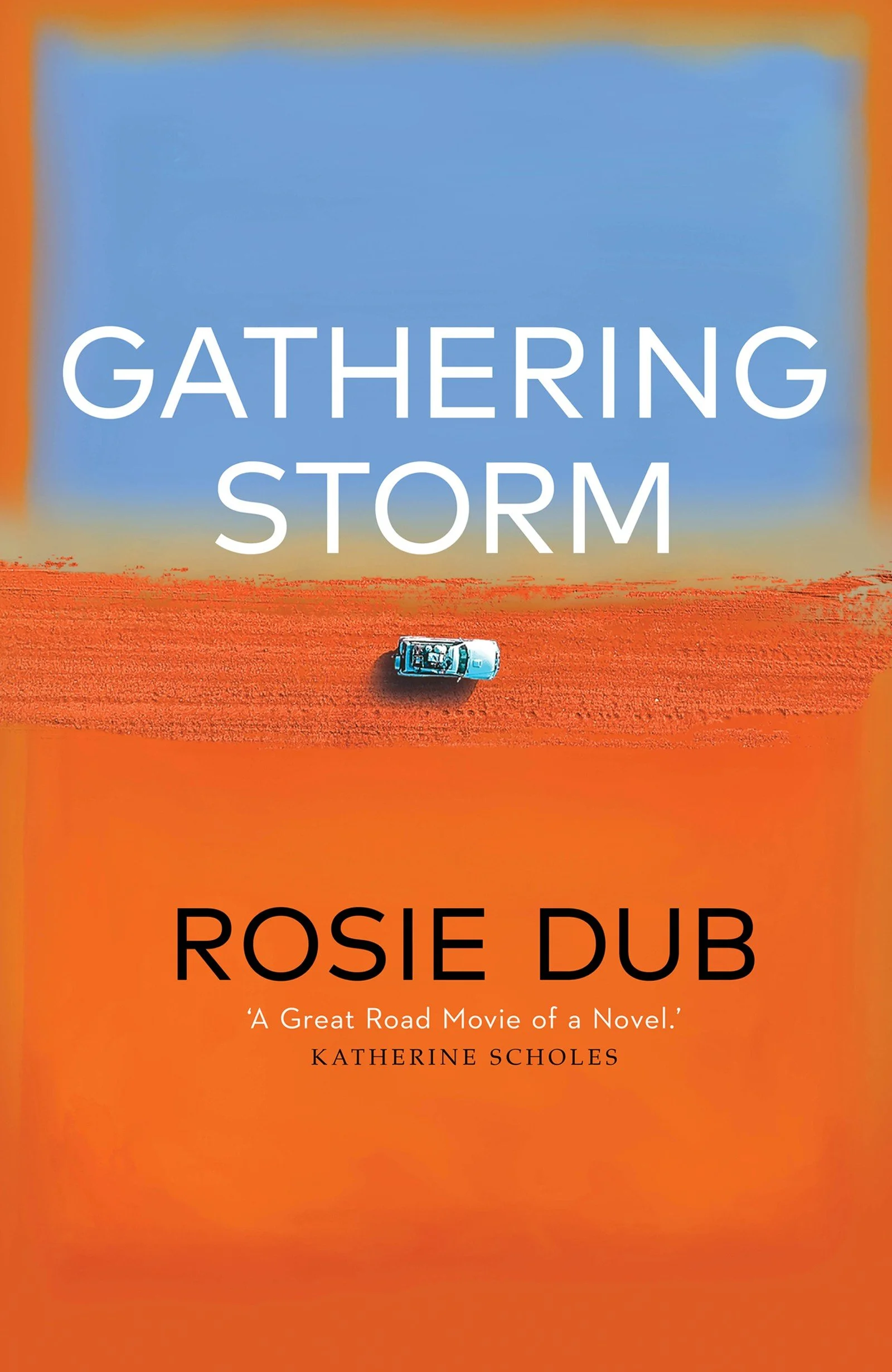
What formed the basis of the novel Gathering storm? Was it a theme or a particular chapter or scene of the book you had in mind? And how did the novel develop from the first ideas to the final version that’s here on my desk?
I don’t plan before I write, instead I start with an image that haunts me and perhaps a theme or two – then see what happens. I write from start to finish, each day’s work pointing me to where I should go next. As I write a plot evolves and I get glimpses of scenes that might come later. It’s an exciting process, fraught with dangers and punctuated with miracles. As Stephen King says in his book, On Writing – stories ‘pretty much make themselves. The job of a writer is to give them a place to grow.’ Aside from a little tidying up, I don’t edit much along the way either, as so much of the material emerges from the unconscious and I can’t tell what use it will be until I have a complete draft. Then I rewrite, over and over, layering and developing, each time understanding more of what I have written.
For me the idea usually comes in the form of an image. This was the case with Gathering Storm. After spending ten years living in the UK, I had returned to Australia with my British husband, Tim and our two young children. We took the opportunity to spend a year or so travelling around Australia in a campervan and our third child was born during this journey. I never imagined this would become a research trip for Gathering Storm but one day in the middle of the desert I suddenly had an image of an abandoned toddler. The contrasts in the image were extreme, the harsh, unforgiving desert and a fragile, vulnerable child. I wrote a few words in my diary, then wrote NOVEL in capital letters and circled it. Four years later I returned to that idea and a story slowly formed around it.
In retrospect I see that the themes in Gathering Storm relate closely to the issues in my own life when I returned to Australia. The journey our family took around Australia was also my own journey into myself, exploring my relationship to the country in which I’d been born and accepting the growing certainty that like Storm, I too needed to turn around and face the past.
Storm is searching for her roots. What’s more important for a human character: the search itself, or the goal Storm is aiming for?
Many of us wish away the search for the goal, yet the two are so closely related that it is impossible to have one without the other. Without her search, Storm would not have been strong enough to look at the truth she was seeking, which eventually came in the form of a traumatic memory that had been buried in her unconscious self, its tentacles reaching into her conscious life and stopping her from living well.
For Storm the search took the form of a road trip into the desert, an unknown and dangerous place. This journey through the wilderness is symbolic of the mythical journey into the labyrinth, or the underworld, a place in which a monster must be faced. The journey parallels the quest of the hero in ancient mythology. It is a place where inner change happens. A place where fear is faced and old wounds healed.
You’re from Australia. People in Europe read very few Australian books. How would you describe ‘the’ Australian novel? In what ways is it different, in what ways is it the same, compared to a European or an American novel?
It isn’t easy to define ‘the’ Australian Novel. Traditionally ‘white’ Australians have looked to Europe for their cultural and historical roots and to America for their modern culture. Over time though, an Australian literature has developed, and in many ways it is not so different from novels arising from other western cultures.
Australia is a country that is predominantly peopled by migrants. There are a number of contradictions inherent in our relationship to the land. We are at once drawn to, and repelled by the Outback, awed by its beauty and frightened by its dangers. As ‘white’ Australians we carry the guilt of the conqueror, a guilt that often stops us from claiming a connection to the land. We have perceptions of what it is to be Australian, our legendary heroes are the men who carved their way into the landscape, making this arid land work for them. We have mythologised the Outback, yet 96% of us live in urban environments, for the most part clustered around the edges of this continent, turned away from the centre which carries such a mystique. We romanticise the wilderness, but most of us rarely, if ever, experience it. Yet, deep within us there’s a longing for wildness, for wilderness and for the sense of real connection with place. Perhaps it is here in the contradictions that an Australian literature can be identified.
The discomfort I feel about my own relationship to Australia led me to choose a British protagonist for Gathering Storm, as well as two contrasting settings - the mystique of Europe and the glare of Australia. Britain is cold, shrouded in mystery, rooted in history and there are secrets. In contrast Australia is heat, glaring light and the uncovering of secrets. In Australia, Storm experiences a sense of freedom, a liberation from the constraints of Britain, yet also a dizzying sense of danger.
You spent a lot of time writing, starting at a young age. Did this lead to your vision on the power of words (see also next questions)?
My adoptive parents were strict Baptists who created a regimented and sterile environment – without artworks, or music (aside from hymns), or dance (which was banned), or even books. . . I grew up in a house without books. Yet my love of writing arose from reading. As soon as I learned to read I was bewitched by language and by story. So yes, I suppose I did understand the power of words. They showed me how vast the imagination is, they transported me out of my restrictive suburban life and let me be anyone I wished to be. When I read I could inhabit other lives; when I wrote I could create worlds of my own. Yet I was also tentative with words, because even as a small child I discovered that they have both the power to heal and to hurt.
What was your reason to start writing as a kid?
Casting spells with words was the closest thing to magic I could find.
Apart from the technical aspects of writing, what other ‘lessons’ or skills did you learn while writing more and more stories?
Oh, so many things! To trust the process of writing, suspending my conscious self and letting the unconscious take over. To accept my need to write and to give it the priority it deserves. That the most important skill any writer can have is an understanding of human nature. That the outer passage of a story is the costume, while the inner passage is the essence. That each time I write a story I learn something about myself. But most comforting of all is the knowledge that no matter how many technical skills I master, there will always be the mystery behind inspiration.
On your website, you wrote an article in which you stated that words have tremendous power: they can hurt, change, move, please or frighten someone, perhaps even more than physical action. Did you write Gathering storm based on this theme?
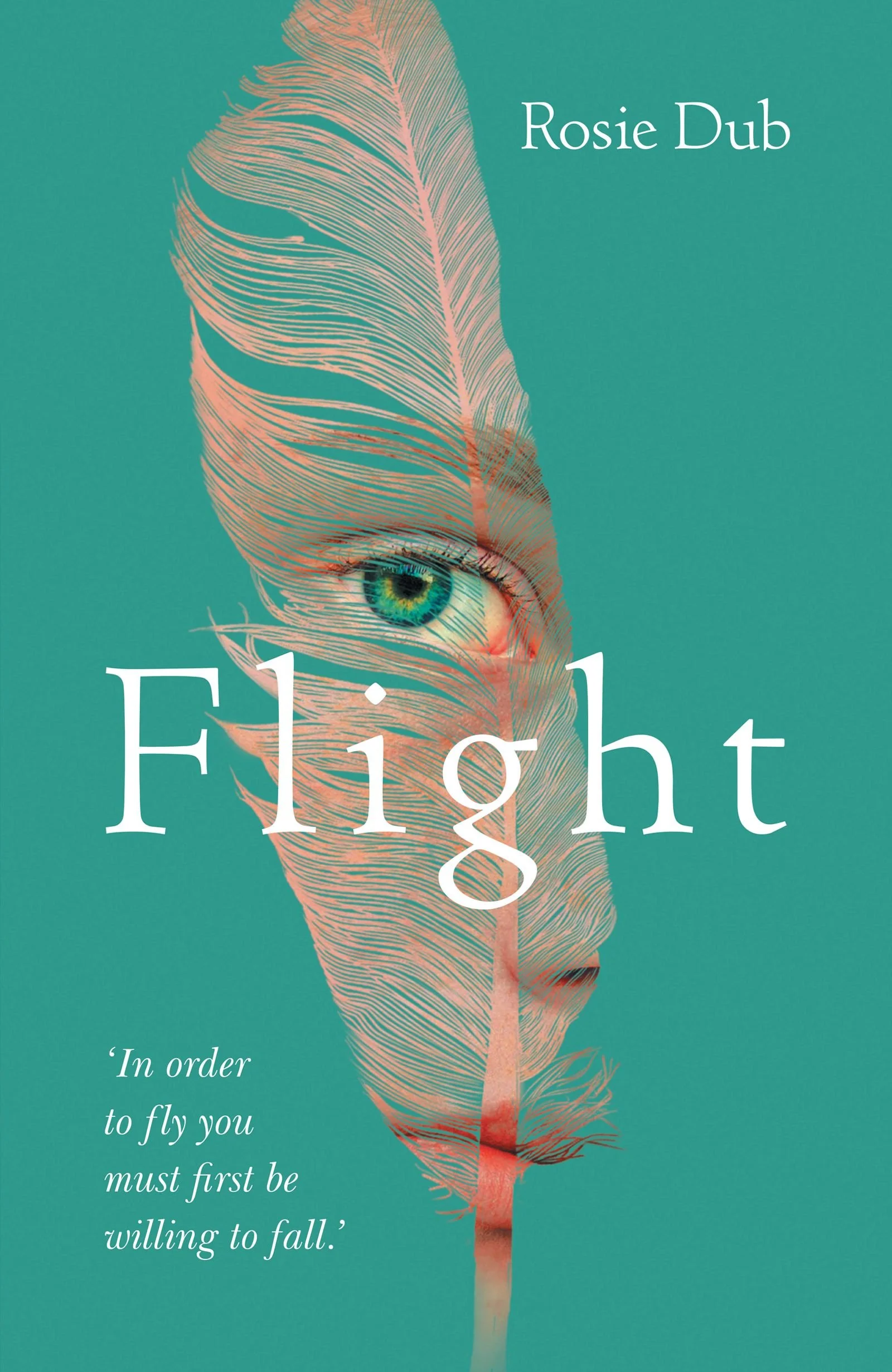
I think that words often stay with you and when they are forgotten, the intention behind them still lingers. Flight, the novel I am now working on explores these ideas further, but this theme also appears less centrally in Gathering Storm. Storm is afraid of the consequences of words, afraid of their power and the potential they have to push people away - hence her inability to communicate with her partner, Max, or insist on answers while her Nan was alive. Of course words are often positive gifts to be cherished, but sometimes the opposite is true. As a child and a teenager I was often crushed by words; they forced my silence, made me guilty and afraid and formed an identity I was uncomfortable with. In the writing of Gathering Storm I was confronting my own caution with words and pushing against the safety barriers I had put in place.
Is the power of words perhaps stronger when expressed by close relatives? What does this say about the way Storm was misinformed about her mother for so long, and her reaction?
If we let them, anyone’s words can have power over us: a blessing from a stranger can light up our day; a word of encouragment can give us courage to try something new; the taunts of a bully can turn us into a frightened victim. Yet our parents have a special power over us that is too often misused. Children need unconditional love yet it isn’t always forthcoming. Storm was hurt by a careless remark her Nan made, and then spent her life believing that she was the cause of her mother’s death. When she found out the truth she was hurt again, yet also relieved. A burden of guilt had been lifted, but she was also realising that her history was a series of lie and omissions.That is a central theme in Gathering Storm, the power of lies and the damage they leave in their wake.
You quoted Christopher Vogler saying: ‘Stories have the power to give people metaphors by which they can better understand their lives.’ Apparently a writer can express a valuable lesson nobody else can.
What does this say about the writer?
Is (s)he perhaps more powerful?
Should a writer therefore have certain extraordinary qualities and knowledge?
Does a writer have more responsibilities because of this?
Stories are a natural part of us, deeply embedded in our psyche. Aside from their great entertainment value they help us make sense of the world, providing frameworks that enable us to find meaning in our lives, to create order from chaos, beauty from pain. Through stories we reach out to others and we discover ourselves. We all tell stories. They are everywhere: in books, the cinema, television and the internet; passed around campfires; and swapped over coffee. . . . A writer consciously sets out to create stories but writers are not extraordinary. The stories they write are a gift, to them and to their readers. It is the responsibility of the writer to be true to themselves and to their writing. Otherwise, I believe the only prerequisites for a writer are a love of language, a need to express themselves, self discipline and a fresh way of looking at the world. Everything else is technique and can be learned.
You wrote: ‘No matter how sophisticated our storytelling has become, how many flashes forward and backwards, how many diversions, there is still a basic structure that can be traced right back to humanity’s earliest stories – and by implication to blueprints of our common psychology.’
In what way has storytelling remained the same for such a long time?
Do you think we have the same stories, the same messages, that need to be told over and over again? (If so, is it because we don’t learn, or forget lessons?)
What does this say about human (psychological) nature?
The costumes of stories change all the time, but their fundamental shape stays the same. The oldest stories are the myths of indigenous cultures and it’s in the stories of their heroes that we can see the same structure we have today. It is in the inner passage of the story, the character arc, that we can see the fundamental similarities between stories. As mythologist, Joseph Campbell asserted in his first book, The Hero With a Thousand Faces, the slaying of a dragon is a metaphor for inner change, for facing those things within us that we are most afraid of. The plot then becomes a metaphor for character development. There is a tension there, because whilst the outer journey often follows a linear sense of time by moving into the future, the inner journey is often a movement into the past, discovering fragments that motivate a characters actions and allow the character to eventually heal a wound.
In relation to story, how quickly we learn and evolve as humans is linked closely to our ability to read and to listen deeply, rather than simply skimming the surface of stories for their entertainment value only. There are many other factors, such as our willingness to seek commonalities rather than differences, and our willingness to face our fears. Most of us are afraid of change. But stories remind us that life is cyclic, that change is inevitable. Whether or not we accept it, embedded in story lies the invitation – to adventure, to journey, to evolve as humans – it’s up to us.