January 12, 2010

Where Truth Lies

Since ancient times we have told each other stories. We sit around camp fires watching the flickering flames and exchanging tales, or curl up in bed with our books, or sit in the cinema, or in front of the television.We read newspapers, listen to the radio and browse the internet. We make up stories for our children, or meet friends for coffee and swap anecdotes. When we sit down at the dinner table and talk to our family, we construct stories from the events of the day, shaping our ideas into a satisfying structure with a beginning, middle and end, creating a narrative flow, an atmosphere, tensions, hooks and characters.
Stories are a natural part of us, deeply embedded in our psyche. Aside from their entertainment value, they help us to make sense of the world. Stories provide frameworks, enabling us to find meaning in our lives, to create order from chaos, beauty from horror. In stories we seek commonality, universal truths. Through stories we reach out to others and we discover ourselves.
For most of my life I have been closely linked to storytelling, professionally, as a writer, an undergraduate and postgraduate student, an editor, mentor, and a teacher of writing. And personally, as a child eager for stories, then as an avid adult reader and a mother of small children. All this time I have been developing my own ideas about the transformative nature of story. What stories give us. What makes them important in our lives. Questions that have become the basis for my thesis.
Over years of writing and teaching I have come to understand just how vital the creative process is to human development. When we shut down that process we shut down ourselves. I believe most writers would agree with Kafka who once wrote: ‘ . . . the existence of the writer is truly dependent on his desk and if he wants to keep madness at bay he must never go far from his desk, he must hold on to it with his teeth. (84)
There are many forms of creativity and each has its own craft with its own techniques and tools that must be learned over time. But there is also a timeless element, the art, the magic of creativity. For me this magic comes in the form of writing. And it exists in the fusion of memory and imagination.
It is well known that memory is closely linked to creativity. The word itself comes from the greek word Mnemosyne. Born from the marriage of Uranus and Gaia, heaven and earth, Mnemosyne was personified as the mother of the nine muses, the patron goddesses of poets and the source of creativity
Memory grounds us, it encompasses what we know, creating fences and boundaries, forming our identities and blurring the fine line between subjective and objective. Memory has a tendency to reinforce the past, creating patterns of unconscious, but learned behaviour, proved perhaps in the old adage - history repeats itself. But memory also has the potential to enable the development of wisdom.
Imagination is like the trickster gods of old. It is a liberating force, cutting through what has been established, making strange what is normal, allowing us to step into the shoes of another, to break free of what we know and to fly. According to Websters dictionary, ‘imagination is the act of forming a mental image of something not present to the senses or never before wholly perceived in reality’. Although imagination has the potential to create an entirely new future it is often dismissed as mere fantasy or used in a destructive manner, as seen in the tendency the human race has to apply the imagination to the invention of weapons.
Memory and imagination are each double sided and together they appear to be contradictory. A tension is created, between the grounding nature of memory and the flightiness of the imagination. For me, the vitality of that tension creates meaning. It is the source of my stories. Trusting it, is an act of faith in the unfolding mystery of story.
As a fiction writer I spend a great deal of time inhabiting the world of the imagination, but I am also fascinated by the memories we carry (often unconsciously) and how they manifest in our lives. In my writing I work closely with the unconscious, taking memories and recreating them, often in a fictional way, finding links and themes, and connoting meaning through metaphor. For it is metaphor that provides a bridge between the conscious and the unconscious allowing the writer access to the stories that inhabit them, offering ways of explaining what cannot be explained and expressing what cannot be expressed. Metaphor also provides us with access to ‘felt’ truths, those which are not measurable or possibly even visible.
Mythologist, Joseph Campbell asserted in his first book, The Hero With a Thousand Faces, that the slaying of a dragon is a metaphor for inner change, for facing those things within us that we are most afraid of. The plot then becomes a metaphor for character development. The outer passage of a story is incidental, the inner passage, fundamental. The outer passage the costume, the inner passage the essence. There is a tension there too, because whilst the outer journey often follows a linear sense of time by moving into the future, the inner journey is often a movement into the past, discovering fragments that motivate a characters actions and allow the character to eventually heal a wound.
As psychologist, Bill Plotkin says: “The wound does not necessarily stem from a single traumatic incident. Often, the wound consists of a pattern of hurtful events or a disturbing dynamic or theme in one or more important relationships.” According to Plotkin, we must be “willing to release our old stories and to become the vehicles through which the new story may emerge into time.”
The very act of writing can be a process of healing. In separating a story from ourselves, in writing it down we are changing our perspective on it and are therefore able to see it differently. Writing can be a cathartic experience, or even a form of restitution as Louise DeSalvo explains in her book, Writing as a Way of Healing. (10)
‘We are the accumulation of the stories we tell ourselves about who we are. So changing our stories. . . can change our personal history, can change us. Through writing we revisit our past and review and revise it. What we thought happened, what we believed happened to us, shifts and changes as we discover deeper and more complex truths. It isn’t that we use our writing to deny what we’ve experienced. Rather, we use it to shift our perspective.’ (11)
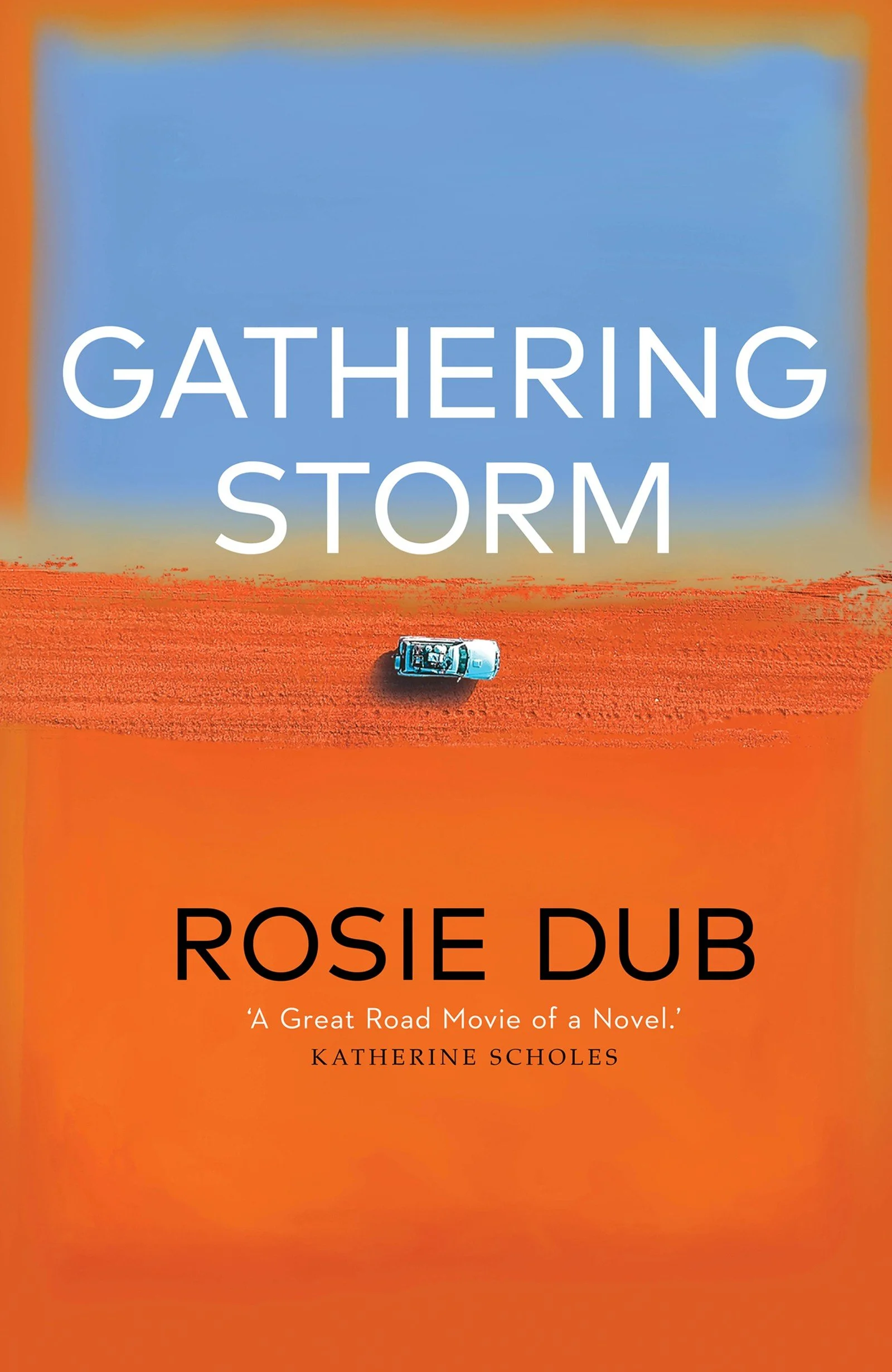
My novel, Gathering Storm is a work of fiction, but many of its themes are ones that are close to my own heart. In it I explore identity and dislocation in a personal sense, through family history and genetic inheritance, but also from a broader cultural perspective, in relation to nationhood and citizenship. Storm is haunted by the secrets and lies that fill her childhood as well as events that occurred well before her birth. When her grandmother dies, Storm discovers a photograph that sends her to Australia on a journey of self-discovery. In Sydney, she buys a Kombi van and travels through the outback, following her mother’s journey 26 years earlier.
Gathering Storm is very much about place and belonging. It also explores the nature of truth, the power of lies and the damage they leave in their wake. But probably, most importantly, Gathering Storm is about identifying and breaking free of negative patterns, by turning around and facing the monsters in ones life and taking the journey from anger to forgiveness and compassion – it’s about becoming oneself and living ones life in relation to that, instead of through the wounds that can be inherited from ones ancestors, from ones culture, and created through the experience of living.
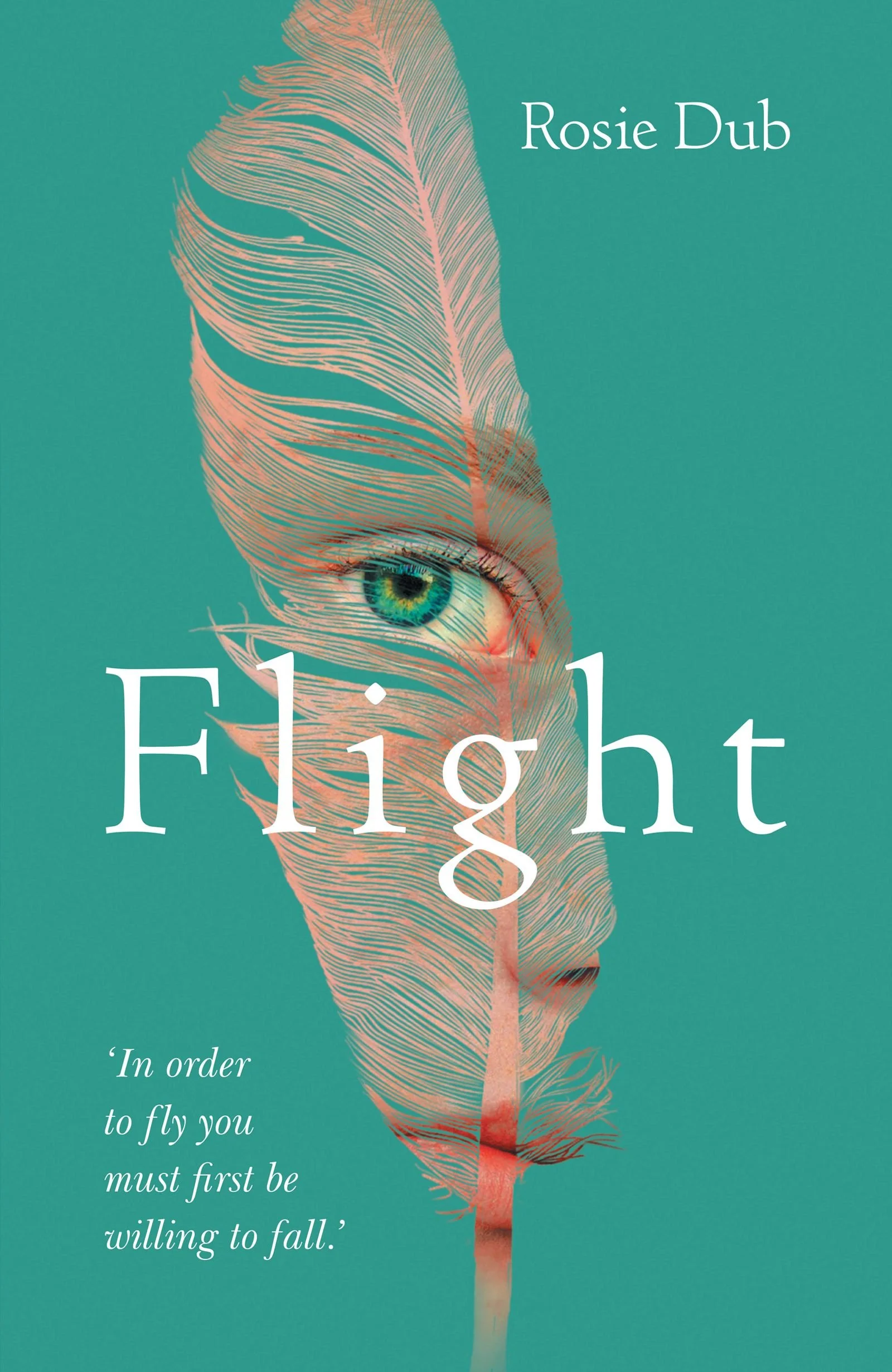
In Flight, the novel I am currently working on, I again explore memory in a personal way: pre-verbal memory, as well as those memories which remain hidden in the unconscious. But this time I am taking it further, venturing into the realms of mysticism, by exploring the idea of carrying memory from past lives – wounds that inhabit the deepest parts of ourselves and cause us to shut down. Two stories are woven through Flight, the title itself reflecting a double meaning – one of running away from something, the other of ascension. The outer journey is the one described above and a metaphor for the inner journey – towards self and the healing of old wounds.
Here is a short passage taken from the prologue of Flight.
People always say that children can’t remember. That babies have no language and therefore no memories. That an abandoned baby can’t be traumatised.
They are wrong.
There are many ways of knowing. The memories we carry in our consciousness are not the only ones. There are others, less literal, ones we can’t relate, and yet their scar tissue builds up so that we live every day of our lives in reaction to them. I have learned first hand that we carry memory in our cells. Unresolved trauma acts like a virus; scarring, mutating, warping our cells until they become sick. Remembering is implicit in the decision to enter the labyrinth, to look inside ourselves, at our wounds and our carefully buried strengths. It’s there in the patterns we identify in our lives. And there too in the truths we discover and recognise as having always known . . .
This is the story of my journey, following the clues back through the twists and turns that turned me into what I was, searching for the moments of definition: the overheard sentence, the intention in another’s eyes, a boy seducing a girl, a fist, a beating and a mother turning her back. I had to go deep into the underworld and enter the labyrinth, with no guarantee of return, seeking the threads that I could weave into a rope thick enough to haul me back out again.
There are gods in this story and those gifted and cursed with the power of prophecy. There’s Shamesh, the lighter of fires and a white eyed shaman. There’s a young man haunted by the past and an old man haunted by the future. There is death and corruption and injustice. Sometimes there is love. Occasionally compassion. But more often, as in real life, there is fear.
I am there too. Haunted and hollow. An outline, waiting to be filled in. Poised, trembling before the entrance to the labyrinth. A shadow of the self I should have been. A shadow of who I am now as I sit here looking for a beginning when there isn’t one, when there never is, because life is simply not neat, and one story hardly ever ends before another begins. Instead they span time and space, reaching back into a past that extends beyond our first breath and into a future that extends beyond our last.
So in the absence of a clear beginning I will draw an artificial line through time and begin on that stifling hot afternoon, in the attic room of a run-down terrace in the inner suburbs of Sydney. . .

The process of writing is both fascinating and mysterious. Perhaps it begins with an idea, an image, or a theme, then like a seed planted deep in the soil, it will grow when the time and conditions are right. More often than not, when I sit down to write, I have no idea what is coming next. As I write, my own memories arise from somewhere deep inside, are given to another character in another time and place, are placed alongside or within entirely fictional scenes, and yet somehow the story stays true to the themes that are woven deeply into my own life. What emerges is a story that is not ‘true’ in the literal sense of the word, and yet it resounds with emotional truth. Campbell once defined myth as ‘A story that is true on the inside but not the outside.
This, I believe, is where truth lies.

No Comments »

No comments yet.

RSS feed for comments on this post. | TrackBack URI
You can also bookmark this on del.icio.us or check the cosmos

Leave a comment

XHTML ( You can use these tags): <a href="" title=""> <abbr title=""> <acronym title=""> <b> <blockquote cite=""> <code> <em> <i> <strike> <strong> .