<?xml version="1.0" encoding="UTF-8"?>
<!-- generator="wordpress/2.0.1" -->
<rss version="2.0" 
	xmlns:content="http://purl.org/rss/1.0/modules/content/"
	xmlns:wfw="http://wellformedweb.org/CommentAPI/"
	xmlns:dc="http://purl.org/dc/elements/1.1/"
	>

<channel>
	<title>Rosie Dub: Writer</title>
	<link>http://rosiedub.com</link>
	<description></description>
	<pubDate>Thu, 14 Jan 2010 21:53:16 +0000</pubDate>
	<generator>http://wordpress.org/?v=2.0.1</generator>
	<language>en</language>
			<item>
		<title>Synopsis of my new novel, &#8216;Flight&#8217;</title>
		<link>http://rosiedub.com/?p=36</link>
		<comments>http://rosiedub.com/?p=36#comments</comments>
		<pubDate>Mon, 11 Jan 2010 23:34:18 +0000</pubDate>
		<dc:creator>rosie</dc:creator>
		
	<category>Writer</category>
	<category>Novels</category>
		<guid isPermaLink="false">http://rosiedub.com/?p=36</guid>
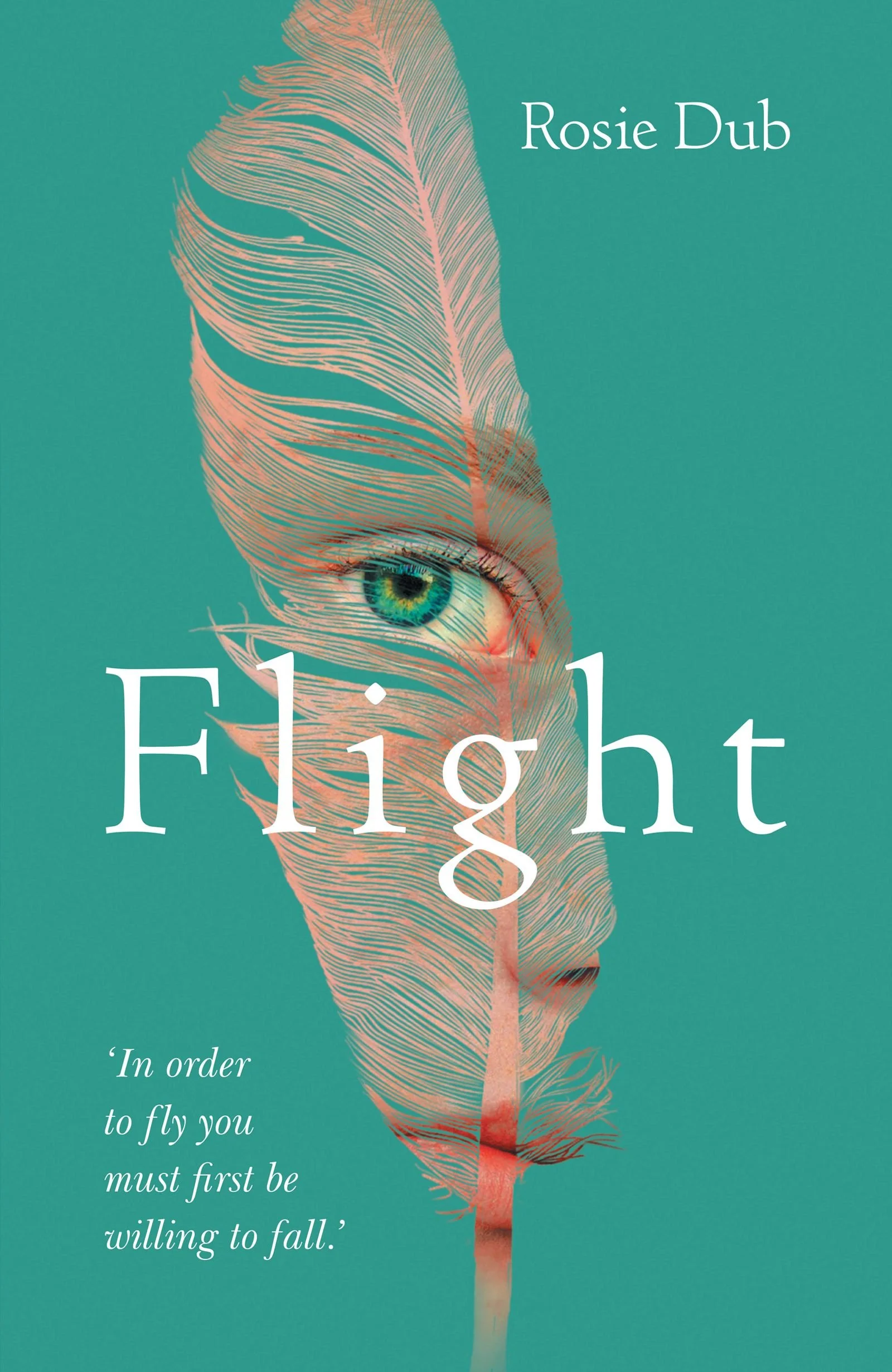
		<description><![CDATA[	Flight is a metaphysical thriller in which the classic narrative patterns of the adventure story and the spiritual journey are intermingled. The protagonist, Fern, is a young woman so damaged by her past that she has withdrawn from reality behind closed doors. But reality has not abandoned her and soon comes knocking.
	The story of how [...]]]></description>
			<content:encoded><![CDATA[<p>	Flight is a metaphysical thriller in which the classic narrative patterns of the adventure story and the spiritual journey are intermingled. The protagonist, Fern, is a young woman so damaged by her past that she has withdrawn from reality behind closed doors. But reality has not abandoned her and soon comes knocking.<br />
	The story of how Fern learns to face the real world raises questions about the nature of reality itself and our perception of it. Her journey is played out against a background of myth and metaphor; sometimes eerie, sometimes earthy, always spellbinding. This contemporary gothic thriller grips the reader from the first page.<br />
	The story opens in Sydney where Fern has immured herself in the attic of a rented terrace house. When her house-mates pack up and leave, Fern is forced to face the outside world. But her past is waiting for her and Fern is soon running scared as her sanity and beliefs begin to unravel.<br />
	Beleagured by memories and otherworldly visions, Fern gradually learns to trust her own powers and perceptions. When someone or something begins to attack her through her dreams, she decides it&#8217;s time to stop running and start looking for answers.<br />
	Together with Adam, an ex-soldier haunted by the past, Fern embarks on a journey which takes them from inner-city Sydney to the labyrinthine depths of the Tasmanian wilderness, where she must finally face down her demons.<br />
	In Fern&#8217;s search for wholeness and self-knowledge, she learns that help can come from mysterious and surprising places, and that the greatest danger of all is the life unlived. As Fern heself soon discovers, in order to fly, one must first be willing to fall.
</p>
]]></content:encoded>
			<wfw:commentRSS>http://rosiedub.com/?feed=rss2&amp;p=36</wfw:commentRSS>
		</item>
		<item>
		<title>Prologue to my new novel, &#8216;Flight&#8217;</title>
		<link>http://rosiedub.com/?p=35</link>
		<comments>http://rosiedub.com/?p=35#comments</comments>
		<pubDate>Mon, 11 Jan 2010 23:31:53 +0000</pubDate>
		<dc:creator>rosie</dc:creator>
		
	<category>Writer</category>
	<category>Novels</category>
		<guid isPermaLink="false">http://rosiedub.com/?p=35</guid>
		<description><![CDATA[	I came early, slithering into the outside world and into safety, or so I hoped. But this was to be the first of many hopes, all dashed against the brutally sharp edges of reality.
	As in all great myths, my birth was accompanied by a prophecy. I, it seemed, would be the death of my father. [...]]]></description>
			<content:encoded><![CDATA[<p>	I came early, slithering into the outside world and into safety, or so I hoped. But this was to be the first of many hopes, all dashed against the brutally sharp edges of reality.<br />
	As in all great myths, my birth was accompanied by a prophecy. I, it seemed, would be the death of my father. How this was to come about no one could say. But the prophecy was there, it escaped from the mouth of Simple Simon, the old gardener at the Botanical Gardens in Adelaide, where my mother often went to sit in her lunch hour.<br />
	On this particular day she was waiting to meet my father. He was late and the pregnant girl felt a persistent nagging worry. There was something big hovering around the edges of things, a sense that life had woken up that morning slightly askew. Nothing she could put her finger on, but it was enough to make her nervous. And then there were the contradictions: worry that he would come; worry that he wouldn&#8217;t. Fear and love  tugging her between them until all she could feel was a tearing anxiety. You see my father was a strong willed man, older than her, but still too young he said, to be tied down like this. He would have walked away but he was snared by his desire for my mother. She was beautiful and fragile and needy, easy to bully but also detached in a way that he could never put a finger on. This detachment was what kept him there, waiting, wanting her to surrender completely. But my father wasn&#8217;t a reflective man, he didn&#8217;t know any of this. If asked he would have said it was his responsibility that kept him there, that it wasn&#8217;t right to abandon her, though really they were both too young for marriage and children.<br />
	It was autumn. There was a chill in the air and the sun was weak, but the sky was blue and the day was clear enough to make everyone&#8217;s heart lift. Even my mother&#8217;s, the seventeen year old girl with the rounded belly who sat on a bench chewing a deviled egg sandwich and watching the wind playfully toss the autumn leaves up and away from the meticulous piles Simon was making.<br />
	When one particularly playful gust sent the leaves up in a spiral, my mother forgot her troubles for a moment and laughed. Simon looked up, straight at her and her laughter quickly turned into a shudder. Where one eye should have been there was a socket, dark and deep. One eye looking out, the other inwards – perhaps this was the secret of his second sight. Or then again, it might have been the snake bite all those years ago which left him hovering between life and death for weeks on end. When he finally woke he knew things other people didn&#8217;t, but had forgotten how to live in this world. No one knew how old Simple Simon was or how long he&#8217;d been working in the Botanical Gardens. He was a fixture, like the giant oak under which my mother sat.<br />
	Simon stood up straight, wincing as he stretched, one hand massaging the small of his back, the other leaning on his rake.<br />
	&#8216;Ah,&#8217; he said, shaking his head. &#8216;That one will be the death of her father.&#8217; He walked over to the girl, wincing again at the creaking in his swollen joints, and poked his finger into her tight belly. &#8216;Mark my words, the death of him.&#8217;<br />
	While my mother sat staring at him, open mouthed, he went back to his raking, still shaking his head, but with a gleam in his eye.<br />
	At that moment I moved. Well bounced really. Did a somersault in a small space, causing my mother to double over in pain and think her time had come. It hadn&#8217;t. I wasn&#8217;t going anywhere. Safety I thought, lay in the warm fluids that contained me. And I didn&#8217;t want to kill anyone, especially my own father, even though I wasn&#8217;t exactly fond of him. There&#8217;d been words already. White knuckles and fists, sending me curling up into a tighter self protective ball. My father didn&#8217;t love me. Even then I was certain of that. And he didn&#8217;t love my mother. Like me she stood between him and his plans. He wanted only to conquer her, in the same way he planned to conquer the world. You see, my father had big ideas swirling inside his head. Even then he loved power more than people.  Even then he would let nothing stand in his way.<a id="more-35"></a><br />
	My mother loved my father, but for all the wrong reasons. Love, hate and fear were all bound up together for her. She was young and weak and couldn&#8217;t distinguish between things. She wanted me and she didn&#8217;t. She was afraid. It&#8217;s not unusual. And Simon&#8217;s prophecy had filled her throat with the burning need to tell. So when my father arrived a few minutes later, she laughed a kind of brittle nervous laugh and repeated what Simon had said. A big mistake, because more than anything my father wanted to live. He was a rational man, or so he claimed, but underneath that there was a deep rooted superstition. Underneath everything he knew the power of shadow.<br />
	At first he tried to laugh it off, but my mother could see the discomfort in his eyes and the tension in his fingers, already bunching up into fists.<br />
	&#8216;You should have got rid of it,&#8217; he hissed. &#8216;I told you.&#8217;<br />
	&#8216;I couldn&#8217;t, you know I couldn&#8217;t.&#8217;<br />
	Then he hit my mother hard in the belly, the shock waves and pain spreading through her thin skin and into me.<br />
	At that moment I decided it was safer out there. I fled, bursting the bag that contained me, sending the warm liquid pouring down my mother&#8217;s legs, soaking her pants and forming a puddle on the ground where she stood, her heart beating in terror from the attack, her breath coming in quick panting bursts. Her fear spread quickly into me. In a panic I bounced my head again and again, pushing at her uterus, sending out waves of contractions. She ran, out of the gardens and onto the street, winding her way through other pedestrians, doubling over with the pain as another contraction hit, then running again, away from him, away from the agony that was me and that was tearing her neatly down the middle.<br />
	It was lunch hour in the centre of town and there were people about. She could see the concern in their eyes, but her terror didn&#8217;t allow her to respond. Like a panicked horse she flew, not noticing where she was. It took a Don&#8217;t Walk sign to bring her to her senses. Perhaps it was some instinct for survival, or the need to protect me. Perhaps it was fate, for the prophecy had been written in the stars and spoken aloud by Simple Simon, setting it in motion. Or perhaps someone reached out their hand and grabbed her arm or dress, pulling her to a halt. It could have been any of these things that made her stop, only a half second away from the truck that muscled across the intersection, dangerously close to the curb, making everyone step back and brushing the wind through her hair just as my head burst free of the birth canal, only to find itself imprisoned in her underpants as she slid, moaning, to the ground, hands reaching out to support her, And all the time my father stood back in the crowd, watching me emerge and wanting to stamp the life out of me, but too afraid to come forward.<br />
	Yet.<br />
	He was biding his time. My father wasn&#8217;t an evil man, but he had already done wrong, and this deed set in motion others. Then it was only a matter of time, as the prophecy ate away at him, turning him into its slave. Perhaps the seeds of madness had already been planted deep in his heart, in this life or another. Or perhaps they were sown later, I am not sure, for it is always hard to see the beginnings of things.<br />
	People always say that children can&#8217;t remember. That babies have no language and therefore no memories. That an abandoned baby can&#8217;t be traumatised. They are wrong.  There are many ways of knowing. The memories we carry in our consciousness are not the only ones. There are others, less literal, ones we can&#8217;t relate, and yet their scar tissue builds up so that we live every day of our lives in reaction to them. I have learned first hand that we carry memory in our cells. Unresolved trauma acts like a cancer; scarring, mutating, warping our cells until they become sick. Remembering is implicit in the decision to enter the labyrinth, to look inside ourselves, at our wounds and our carefully buried strengths. It&#8217;s there in the patterns we identify in our lives. And there too in the truths we discover and recognise as having always known.<br />
	I know these things because I have looked deeply into myself and seen what needed seeing. But all those years ago the knowing was different and tucked so far inside that it was only visible in the nervousness of a baby, the endless crying, the food that came back up, day after day, month after month, and in a desperate fear of the dark.  There were insights and flashes, a word, an image, a feeling.  A fist. . . A searing pain. . . A few words. . . &#8216;Abomination&#8217; was one of them. &#8216;It&#8217; was another. &#8216;Get rid of it,&#8217; he said, the anger in his voice, trying to mask the querulous fear in his eyes. &#8216;Get rid of it.&#8217; And with those words I had understood that I was the &#8216;it&#8217; in question. So much easier to kill an &#8216;it&#8217; than a &#8217;she&#8217; or a &#8216;he&#8217;.  More than anything though, I remembered intent. Murderous intent. Father&#8217;s aren&#8217;t supposed to be like that. But this one was and these were the events that formed me, leaving little kernels of hurt that made me turn away from them, always seeking safety and never finding it.<br />
	I was born in Adelaide on January 2nd  1989.<br />
	Right from the beginning, life for me was a serious matter of survival, but it was also something I did not relish at all. A contradiction I know, and one that tugged me this way and that, making me strong, yet fearful, determined, yet too ready to give up. A contradiction that for many years trapped me in a half-life, a twilight world of muted colours. A prison I didn&#8217;t even know I was in, until I made my escape.<br />
	I entered this world wearing my mother&#8217;s blood and carrying the marks of my father&#8217;s fist on my back. Within minutes of my birth an ambulance arrived, it&#8217;s siren sending my heart thumping too fast all over again. There were danger signals everywhere and I could no longer distinguish between what was safe and what was not.  But I was a tiny baby, born a month early and the hands of these men were gentle as they carried me to the relative safety of the hospital.<br />
	He tried one more time. In the hospital ward, his large hand grabbing me by the leg and swinging me up and out of the plastic crib and head first into the wall. One swing, but he hadn&#8217;t built up momentum yet and babies heads are notoriously soft. My mother&#8217;s loyalties were torn, but for that one crucial moment the hormones swilling through her body put her on my side. She screamed. Just once, but there was a tone in it, enough to bring people running. Before the next swing a nurse appeared in the doorway and reading the madness in my father&#8217;s eyes, pressed the alarm.<br />
	Already a master of disguise, my father recovered quickly, cradling me in his arms, uttering comforting baby noises while I stared mutely up into his eyes, my heart thudding.<br />
	&#8216;I slipped, he told the nurse. &#8216;I almost dropped her. My God, they&#8217;re so fragile.&#8217; Then as a nurse took her from him. &#8216;She&#8217;s alright, isn&#8217;t she?&#8217;<br />
	Uncertain now, the nurse looked at my mother lying there in the crisp white hospital bed, wearing a white hospital gown because there&#8217;d been no time to pack, sobbing, milk leaking from her nipples and running down her chest.<br />
	Wiping her eyes, my mother looked at each of us in turn, seeing the threat in my father&#8217;s eyes, the bewildered fear in mine and the question in the nurse&#8217;s. Then stony faced she turned away from us all. She had made a decision.<br />
	&#8216;It was an accident,&#8217; she said, looking down so the nurse couldn&#8217;t see the lie in her eyes.  &#8216;He slipped.&#8217;<br />
	But she did sign the adoption forms.<br />
	To keep me safe.<br />
	Then she wrapped me tightly in a white blanket, placed me back in the plastic see-through hospital issue crib, and wheeled me into a room full of other howling cribs, setting me loose into a sea of indifference with no anchor and no oars, with only the sun, the moon and the stars to navigate by, and no lessons to help me decipher them.</p>
<p>	On my original birth certificate there is a blank space next to Father. . . . . . .<br />
	My mother&#8217;s name is listed as Joan Darkwood.<br />
	My name is listed as Erica.<br />
	On my second birth certificate my father&#8217;s name is listed as Richard Parsons<br />
	My mother&#8217;s as Diedre Parsons<br />
	My adopted parents called me Fernanda after an evangelical missionary they favoured at the time.<br />
	I called myself Fern.<br />
	More than anything I wanted to fly.<br />
	But in order to fly, one must first be willing to fall. </p>
<p>	This is the story of my journey, following the clues back through the twists and turns that turned me into what I was, searching for the moments of definition: the overheard sentence, the intention in another&#8217;s eyes,  a boy seducing a girl, a fist, a beating and a mother turning her back. I had to go deep into the underworld and enter the labyrinth, with no guarantee of return, seeking the threads that I could weave into a rope thick enough to haul me back out again.<br />
	There are gods in this story and those gifted and cursed with the power of prophecy. There&#8217;s a young man haunted by the past and an old man haunted by the future. There is death and corruption and injustice. Sometimes there is love. Occasionally compassion. But more often, as in real life, there is fear.<br />
	I am there too.  Haunted and hollow. An outline, waiting to be filled in. Poised, trembling before the entrance to the labyrinth. A shadow of the self I should have been. A shadow of who I am now as I sit here looking for a beginning when there isn&#8217;t one, when there never is, because life is simply not neat, and one story hardly ever ends before another begins. Instead they span time and space, reaching back into a past that extends beyond our first breath and into a future that extends beyond our last.<br />
	So in the absence of a clear beginning I will draw an artificial line through time and begin on that stifling hot afternoon, in the attic room of a run-down terrace in the inner suburbs of Sydney. . . </p>
]]></content:encoded>
			<wfw:commentRSS>http://rosiedub.com/?feed=rss2&amp;p=35</wfw:commentRSS>
		</item>
		<item>
		<title>Praise for Gathering Storm</title>
		<link>http://rosiedub.com/?p=34</link>
		<comments>http://rosiedub.com/?p=34#comments</comments>
		<pubDate>Mon, 11 Jan 2010 23:22:46 +0000</pubDate>
		<dc:creator>rosie</dc:creator>
		
	<category>Writer</category>
	<category>Reviews</category>
		<guid isPermaLink="false">http://rosiedub.com/?p=34</guid>
		<description><![CDATA[&#8216;. . . A bit of a Heart of Darkness – Apocalypse Now tale. It is part thriller, part hippie road story and part rite-of-passage trip in search of identity. Above all it is a compelling, stylish and well-paced read. Frightening at times and searching in its awareness of landscape and family secrets, this is [...]]]></description>
			<content:encoded><![CDATA[<p>&#8216;. . . A bit of a Heart of Darkness – Apocalypse Now tale. It is part thriller, part hippie road story and part rite-of-passage trip in search of identity. Above all it is a compelling, stylish and well-paced read. Frightening at times and searching in its awareness of landscape and family secrets, this is a fine debut.&#8217;<br />
Weekend Australian</p>
<p>&#8216;A deeply moving fiction debut in which Dub examines the virtue of truth, the harm of lies, the pain of secrets, the desire for belonging and the difficulty of confronting ones past to ensure the future.&#8217;<br />
Weekend Gold Coast Bulletin</p>
<p>&#8216;A gritty sandblown kind of story that once begun gets into your consciousness with compelling insistence. Yes, it&#8217;s a page-turner and yes, it&#8217;s a thriller-cum-rite-of-passage tale. . . The strength of Dub&#8217;s ability to tell a story and hold an audience is clear in this first novel of hopefully many more. It is a book of many pathways to the heart and soul, of not only a country but families who deny the truth of who they are and what they strive to protect. . .&#8217;<br />
Sunday Tasmanian</p>
<p>&#8216;Here we have a Tasmanian writer with a first novel that grabs you from the very first page. Well written, it is a compelling story that takes the protagonist on a journey of self discovery. . . We will hear more from  Rosie Dub; well done.&#8217;<br />
Tasmanian Life</p>
<p>&#8216;. . . a fascinating story of discovery, generations, Romany lore, Australia, and of Storm herself.&#8217;<br />
Cairns Post</p>
<p>* * * * *<br />
Adelaide Advertiser</p>
<p>&#8216;An absorbing first novel.&#8217;<br />
Women&#8217;s Day</p>
]]></content:encoded>
			<wfw:commentRSS>http://rosiedub.com/?feed=rss2&amp;p=34</wfw:commentRSS>
		</item>
		<item>
		<title>Interview with Boekenkrant in the Netherlands</title>
		<link>http://rosiedub.com/?p=31</link>
		<comments>http://rosiedub.com/?p=31#comments</comments>
		<pubDate>Mon, 11 Jan 2010 23:11:55 +0000</pubDate>
		<dc:creator>rosie</dc:creator>
		
	<category>Writer</category>
	<category>Reviews</category>
		<guid isPermaLink="false">http://rosiedub.com/?p=31</guid>
		<description><![CDATA[
What formed the basis of the novel Gathering storm? Was it a theme or a particular chapter or scene of the book you had in mind? And how did the novel develop from the first ideas to the final version that’s here on my desk?
I don&#8217;t plan before I write, instead I start with an [...]]]></description>
			<content:encoded><![CDATA[<p>
What formed the basis of the novel Gathering storm? Was it a theme or a particular chapter or scene of the book you had in mind? And how did the novel develop from the first ideas to the final version that’s here on my desk?</p>
<p>I don&#8217;t plan before I write, instead I start with an image that haunts me and perhaps a theme or two – then see what happens. I write from start to finish, each day&#8217;s work pointing me to where I should go next. As I write a plot evolves and I get glimpses of scenes that might come later. It&#8217;s an exciting process, fraught with dangers and punctuated with miracles. As Stephen King says in his book, On Writing – stories &#8216;pretty much make themselves. The job of a writer is to give them a place to grow.&#8217; Aside from a little tidying up, I don&#8217;t edit much along the way either, as so much of the material emerges from the unconscious and I can&#8217;t tell what use it will be until I have a complete draft. Then I rewrite, over and over, layering and developing, each time understanding more of what I have written. </p>
<p>For me the idea usually comes in the form of an image. This was the case with Gathering Storm. After spending ten years living in the UK, I had returned to Australia with my British husband, Tim and our two young children. We took the opportunity to spend a year or so travelling around Australia in a campervan and our third child was born during this journey. I never imagined this would become a research trip for Gathering Storm but one day in the middle of the desert I suddenly had an image of an abandoned toddler. The contrasts in the image were extreme, the harsh, unforgiving desert and a fragile, vulnerable child. I wrote a few words in my diary, then wrote NOVEL in capital letters and circled it. Four years later I returned to that idea and a story slowly formed around it. </p>
<p>In retrospect I see that the themes in Gathering Storm relate closely to the issues in my own life when I returned to Australia. The journey our family took around Australia was also my own journey into myself, exploring my relationship to the country in which I&#8217;d been born and accepting the growing certainty that like Storm, I too needed to turn around and face the past. </p>
<p>Storm is searching for her roots. What’s more important for a human character: the search itself, or the goal Storm is aiming for?</p>
<p>Many of us wish away the search for the goal, yet the two are so closely related that it is impossible to have one without the other. Without her search, Storm would not have been strong enough to look at the truth she was seeking, which eventually came in the form of a traumatic memory that had been buried in her unconscious self, its tentacles reaching into her conscious life and stopping her from living well.  </p>
<p>For Storm the search took the form of a road trip into the desert, an unknown and dangerous place. This journey through the wilderness is symbolic of the mythical journey into the labyrinth, or the underworld, a place in which a monster must be faced. The journey parallels the quest of the hero in ancient mythology. It is a place where inner change happens. A place where fear is faced and old wounds healed.</p>
<p><a id="more-31"></a></p>
<p>You’re from Australia. People in Europe read very few Australian books. How would you describe ‘the’ Australian novel? In what ways is it different, in what ways is it the same, compared to a European or an American novel?</p>
<p>It isn&#8217;t easy to define &#8216;the&#8217; Australian Novel. Traditionally &#8216;white&#8217; Australians have looked to Europe for their cultural and historical roots and to America for their modern culture. Over time though, an Australian literature has developed, and in many ways it is not so different from novels arising from other western cultures. </p>
<p>Australia is a country that is predominantly peopled by migrants. There are a number of contradictions inherent in our relationship to the land. We are at once drawn to, and repelled by the Outback, awed by its beauty and frightened by its dangers. As &#8216;white&#8217; Australians we carry the guilt of the conqueror, a guilt that often stops us from claiming a connection to the land. We have perceptions of what it is to be Australian, our legendary heroes are the men who carved their way into the landscape, making this arid land work for them. We have mythologised the Outback, yet 96% of us live in urban environments, for the most part clustered around the edges of this continent, turned away from the centre which carries such a mystique. We romanticise the wilderness, but most of us rarely, if ever, experience it. Yet, deep within us there&#8217;s a longing for wildness, for wilderness and for the sense of real connection with place. Perhaps it is here in the contradictions that an Australian literature can be identified. </p>
<p>The discomfort I feel about my own relationship to Australia led me to choose a British protagonist for Gathering Storm, as well as two contrasting settings - the mystique of Europe and the glare of Australia. Britain is cold, shrouded in mystery, rooted in history and there are secrets. In contrast Australia is heat, glaring light and the uncovering of secrets. In Australia, Storm experiences a sense of freedom, a liberation from the constraints of Britain, yet also a dizzying sense of danger.</p>
<p>You spent a lot of time writing, starting at a young age. Did this lead to your vision on the power of words (see also next questions)?<br />
My adoptive parents were strict Baptists who created a regimented and sterile environment – without artworks, or music (aside from hymns), or dance (which was banned), or even books. . . I grew up in a house without books. Yet my love of writing arose from reading. As soon as I learned to read I was bewitched by language and by story. So yes, I suppose I did understand the power of words. They showed me how vast the imagination is, they transported me out of my restrictive suburban life and let me be anyone I wished to be. When I read I could inhabit other lives; when I wrote I could create worlds of my own. Yet I was also tentative with words, because even as a small child I discovered that they have both the power to heal and to hurt. </p>
<p>What was your reason to start writing as a kid?</p>
<p>Casting spells with words was the closest thing to magic I could find. </p>
<p>Apart from the technical aspects of writing, what other ‘lessons’ or skills did you learn while writing more and more stories?</p>
<p>Oh, so many things! To trust the process of writing, suspending my conscious self and letting the unconscious take over. To accept my need to write and to give it the priority it deserves.  That the most important skill any writer can have is an understanding of human nature. That  the outer passage of a story is the costume, while the inner passage is the essence. That each time I write a story I learn something about myself. But most comforting of all is the knowledge that no matter how many technical skills I master, there will always be the mystery behind inspiration.  </p>
<p>On your website, you wrote an article in which you stated that words have tremendous power: they can hurt, change, move, please or frighten someone, perhaps even more than physical action. Did you write Gathering storm based on this theme?</p>
<p>I think that words often stay with you and when they are forgotten, the intention behind them still lingers. Flight, the novel I am now working on explores these ideas further, but this theme also appears less centrally in Gathering Storm. Storm is afraid of the consequences of words, afraid of their power and the potential they have to push people away - hence her inability to communicate with her partner, Max, or insist on answers while her Nan was alive. Of course words are often positive gifts to be cherished, but sometimes the opposite is true. As a child and a teenager I was often crushed by words; they forced my silence, made me guilty and afraid and formed an identity I was uncomfortable with. In the writing of Gathering Storm I was confronting my own caution with words and pushing against the safety barriers I had put in place. </p>
<p>Is the power of words perhaps stronger when expressed by close relatives? What does this say about the way Storm was misinformed about her mother for so long, and her reaction?</p>
<p>If we let them, anyone&#8217;s words can have power over us: a blessing from a stranger can light up our day; a word of encouragment can give us courage to try something new; the taunts of a bully can turn us into a frightened victim. Yet our parents have a special power over us that is too often misused. Children need unconditional love yet it isn&#8217;t always forthcoming. Storm was hurt by a careless remark her Nan made, and then spent her life believing that she was the cause of her mother&#8217;s death. When she found out the truth she was hurt again, yet also relieved. A burden of guilt had been lifted, but she was also realising that her history was a series of lie and omissions.That is a central theme in Gathering Storm, the power of lies and the damage they leave in their wake. </p>
<p>You quoted Christopher Vogler saying: ‘Stories have the power to give people metaphors by which they can better understand their lives.’ Apparently a writer can express a valuable lesson nobody else can.<br />
What does this say about the writer?<br />
Is (s)he perhaps more powerful?<br />
Should a writer therefore have certain extraordinary qualities and knowledge?<br />
Does a writer have more responsibilities because of this?</p>
<p>Stories are a natural part of us, deeply embedded in our psyche. Aside from their great entertainment value they help us make sense of the world, providing frameworks that enable us to find meaning in our lives, to create order from chaos, beauty from pain. Through stories we reach out to others and we discover ourselves. We all tell stories. They are everywhere: in books, the cinema, television and the internet; passed around campfires; and swapped over coffee. . . . A writer consciously sets out to create stories but writers are not extraordinary. The stories they write are a gift, to them and to their readers. It is the responsibility of the writer to be true to themselves and to their writing. Otherwise, I believe the only prerequisites for a writer are a love of language, a need to express themselves, self discipline and a fresh way of looking at the world. Everything else is technique and can be learned. </p>
<p>You wrote: ‘No matter how sophisticated our storytelling has become, how many flashes forward and backwards, how many diversions, there is still a basic structure that can be traced right back to humanity’s earliest stories – and by implication to blueprints of our common psychology.’<br />
In what way has storytelling remained the same for such a long time?<br />
Do you think we have the same stories, the same messages, that need to be told over and over again? (If so, is it because we don’t learn, or forget lessons?)<br />
What does this say about  human (psychological) nature?</p>
<p>The costumes of stories change all the time, but their fundamental shape stays the same. The oldest stories are the myths of indigenous cultures and it&#8217;s in the stories of their heroes that we can see the same structure we have today. It is in the inner passage of the story, the character arc, that we can see the fundamental similarities between stories. As mythologist, Joseph Campbell asserted in his first book, The Hero With a Thousand Faces, the slaying of a dragon is a metaphor for inner change, for facing those things within us that we are most afraid of. The plot then becomes a metaphor for character development. There is a tension there, because whilst the outer journey often follows a linear sense of time by moving into the future, the inner journey is often a movement into the past, discovering fragments that motivate a characters actions and allow the character to eventually heal a wound. </p>
<p>In relation to story, how quickly we learn and evolve as humans is linked closely to our ability to read and to listen deeply, rather than simply skimming the surface of stories for their entertainment value only. There are many other factors, such as our willingness to seek commonalities rather than differences, and our willingness to face our fears. Most of us are afraid of change. But stories remind us that life is cyclic, that change is inevitable. Whether or not we accept it, embedded in story lies the invitation – to adventure, to journey, to evolve as humans – it&#8217;s up to us.  </p>
]]></content:encoded>
			<wfw:commentRSS>http://rosiedub.com/?feed=rss2&amp;p=31</wfw:commentRSS>
		</item>
		<item>
		<title>Where Truth Lies</title>
		<link>http://rosiedub.com/?p=30</link>
		<comments>http://rosiedub.com/?p=30#comments</comments>
		<pubDate>Mon, 11 Jan 2010 23:03:55 +0000</pubDate>
		<dc:creator>rosie</dc:creator>
		
	<category>Writer</category>
	<category> Nonfiction</category>
		<guid isPermaLink="false">http://rosiedub.com/?p=30</guid>
		<description><![CDATA[	Since ancient times we have told each other stories. We sit around camp fires watching the flickering flames and exchanging tales, or curl up in bed with our books, or sit in the cinema, or in front of the television.We read newspapers, listen to the radio and browse the internet. We make up stories for [...]]]></description>
			<content:encoded><![CDATA[<p>	Since ancient times we have told each other stories. We sit around camp fires watching the flickering flames and exchanging tales, or curl up in bed with our books, or sit in the cinema, or in front of the television.We read newspapers, listen to the radio and browse the internet. We make up stories for our children, or meet friends for coffee and swap anecdotes. When we sit down at the dinner table and talk to our family, we construct stories from the events of the day, shaping our ideas into a satisfying structure with a beginning, middle and end, creating a narrative flow, an atmosphere, tensions, hooks and characters.<br />
	Stories are a natural part of us, deeply embedded in our psyche. Aside from their entertainment value, they help us to make sense of the world. Stories provide frameworks, enabling us to find meaning in our lives, to create order from chaos, beauty from horror. In stories we seek commonality, universal truths. Through stories we reach out to others and we discover ourselves.<br />
	For most of my life I have been closely linked to storytelling, professionally, as a writer, an undergraduate and postgraduate student, an editor, mentor, and a teacher of writing. And personally, as a child eager for stories, then as an avid adult reader and a mother of small children. All this time I have been developing my own ideas about the transformative nature of story. What stories give us. What makes them important in our lives. Questions that have become the basis for my thesis.<br />
	Over years of writing and teaching I have come to understand just how vital the creative process is to human development. When we shut down that process we shut down ourselves. I believe most writers would agree with Kafka who once wrote: &#8216;  . . . the existence of the writer is truly dependent on his desk and if he wants to keep madness at bay he must never go far from his desk, he must hold on to it with his teeth. (84)<br />
	There are many forms of creativity and each has its own craft with its own techniques and tools that must be learned over time. But there is also a timeless element, the art, the magic of creativity. For me this magic comes in the form of writing. And it exists in the fusion of memory and imagination.<br />
	It is well known that memory is closely linked to creativity. The word itself comes from the greek word Mnemosyne. Born from the marriage of Uranus and Gaia, heaven and earth, Mnemosyne was personified as the mother of the nine muses, the patron goddesses of poets and the source of creativity<br />
	Memory grounds us, it encompasses what we know, creating fences and boundaries, forming our identities and blurring the fine line between subjective and objective. Memory has a tendency to reinforce the past, creating patterns of unconscious, but learned behaviour, proved perhaps in the old adage - history repeats itself. But memory also has the potential to enable the development of wisdom.<br />
	Imagination is like the trickster gods of old. It is a liberating force, cutting through what has been established, making strange what is normal, allowing us to step into the shoes of another, to break free of what we know and to fly. According to Websters dictionary, &#8216;imagination is the act of  forming a mental image of something not present to the senses or never before wholly perceived in reality&#8217;.   Although imagination has the potential to create an entirely new future it is often dismissed as mere fantasy or used in a destructive manner, as seen in the tendency the human race has to apply the imagination to the invention of weapons.<br />
	Memory and imagination are each double sided and together they appear to be contradictory. A tension is created, between the grounding nature of memory and the flightiness of the imagination. For me, the vitality of that tension creates meaning. It is the source of my stories. Trusting it, is an act of faith in the unfolding mystery of story.<a id="more-30"></a><br />
	As a fiction writer I spend a great deal of time inhabiting the world of the imagination, but I am also fascinated by the memories we carry (often unconsciously) and how they manifest in our lives. In my writing I work closely with the unconscious, taking memories and recreating them, often in a fictional way, finding links and themes, and connoting meaning through metaphor.  For it is metaphor that provides a bridge between the conscious and the unconscious allowing the writer access to the stories that inhabit them, offering ways of explaining what cannot be explained and expressing what cannot be expressed. Metaphor also provides us with access to &#8216;felt&#8217; truths, those which are not measurable or possibly even visible.<br />
	Mythologist, Joseph Campbell asserted in his first book, The Hero With a Thousand Faces, that the slaying of a dragon is a metaphor for inner change, for facing those things within us that we are most afraid of. The plot then becomes a metaphor for character development. The outer passage of a story is incidental, the inner passage, fundamental. The outer passage the costume, the inner passage the essence.  There is a tension there too, because whilst the outer journey often follows a linear sense of time by moving into the future, the inner journey is often a movement into the past, discovering fragments that motivate a characters actions and allow the character to eventually heal a wound.<br />
	As psychologist, Bill Plotkin says: “The wound does not necessarily stem from a single traumatic incident. Often, the wound consists of a pattern of hurtful events or a disturbing dynamic or theme in one or more important relationships.” According to Plotkin, we must be “willing to release our old stories and to become the vehicles through which the new story may emerge into time.”<br />
	The very act of writing can be a process of healing. In separating a story from ourselves, in writing it down we are changing our perspective on it and are therefore able to see it differently.  Writing can be a cathartic experience, or even a form of restitution as Louise DeSalvo explains in her book, Writing as a Way of Healing. (10)<br />
	&#8216;We are the accumulation of the stories we tell ourselves about who we are. So changing our stories. . . can change our personal history, can change us. Through writing we revisit our past and review and revise it. What we thought happened, what we believed happened to us, shifts and changes as we discover deeper and more complex truths. It isn&#8217;t that we use our writing to deny what we&#8217;ve experienced. Rather, we use it to shift our perspective.&#8217; (11)<br />
	My novel, Gathering Storm is a work of fiction, but many of its themes are ones that are close to my own heart.  In it I explore identity and dislocation in a personal sense, through family history and genetic inheritance, but also from a broader cultural perspective, in relation to nationhood and citizenship. Storm is haunted by the secrets and lies that fill her childhood as well as events that occurred well before her birth. When her grandmother dies, Storm discovers a photograph that sends her to Australia on a journey of self-discovery. In Sydney, she buys a Kombi van and travels through the outback, following her mother&#8217;s journey 26 years earlier.<br />
	Gathering Storm is very much about place and belonging. It also explores the nature of truth, the power of lies and the damage they leave in their wake. But probably, most importantly, Gathering Storm is about identifying and breaking free of negative patterns, by turning around and facing the monsters in ones life and taking the journey from anger to forgiveness and compassion – it&#8217;s about becoming oneself and living ones life in relation to that, instead of through the wounds that can be inherited from ones ancestors, from ones culture, and created through the experience of living.<br />
	In Flight, the novel I am currently working on, I again explore memory in a personal way:  pre-verbal memory, as well as those memories which remain hidden in the unconscious. But this time I am taking it further, venturing into the realms of mysticism, by exploring the idea of carrying memory from past lives – wounds that inhabit the deepest parts of ourselves and cause us to shut down. Two stories are woven through Flight, the title itself reflecting a double meaning – one of running away from something, the other of ascension. The outer journey is the one described above and a metaphor for the inner journey – towards self and the healing of old wounds.<br />
	Here  is a short passage taken from the prologue of Flight.<br />
	People always say that children can&#8217;t remember. That babies have no language and therefore no memories. That an abandoned baby can&#8217;t be traumatised.<br />
	They are wrong.<br />
	There are many ways of knowing. The memories we carry in our consciousness are not the only ones. There are others, less literal, ones we can&#8217;t relate, and yet their scar tissue builds up so that we live every day of our lives in reaction to them. I have learned first hand that we carry memory in our cells. Unresolved trauma acts like a virus; scarring, mutating, warping our cells until they become sick. Remembering is implicit in the decision to enter the labyrinth, to look inside ourselves, at our wounds and our carefully buried strengths. It&#8217;s there in the patterns we identify in our lives. And there too in the truths we discover and recognise as having always known . . .<br />
	This is the story of my journey, following the clues back through the twists and turns that turned me into what I was, searching for the moments of definition: the overheard sentence, the intention in another&#8217;s eyes,  a boy seducing a girl, a fist, a beating and a mother turning her back. I had to go deep into the underworld and enter the labyrinth, with no guarantee of return, seeking the threads that I could weave into a rope thick enough to haul me back out again.<br />
	There are gods in this story and those gifted and cursed with the power of prophecy. There&#8217;s Shamesh, the lighter of fires and a white eyed shaman. There&#8217;s a young man haunted by the past and an old man haunted by the future. There is death and corruption and injustice. Sometimes there is love. Occasionally compassion. But more often, as in real life, there is fear.<br />
	I am there too.  Haunted and hollow. An outline, waiting to be filled in. Poised, trembling before the entrance to the labyrinth. A shadow of the self I should have been. A shadow of who I am now as I sit here looking for a beginning when there isn&#8217;t one, when there never is, because life is simply not neat, and one story hardly ever ends before another begins. Instead they span time and space, reaching back into a past that extends beyond our first breath and into a future that extends beyond our last.<br />
	So in the absence of a clear beginning I will draw an artificial line through time and begin on that stifling hot afternoon, in the attic room of a run-down terrace in the inner suburbs of Sydney. . .	</p>
<p>	The process of writing is both fascinating and mysterious. Perhaps it begins with an idea, an image, or a theme, then like a seed planted deep in the soil, it will grow when the time and conditions are right. More often than not, when I sit down to write, I have no idea what is coming next. As I write, my own memories arise from somewhere deep inside, are given to another character in another time and place, are placed alongside or within entirely fictional scenes, and yet somehow the story stays true to the themes that are woven deeply into my own life. What emerges is a story that is not &#8216;true&#8217; in the literal sense of the word, and yet it resounds with emotional truth. Campbell once defined myth as &#8216;A story that is true on the inside but not the outside.<br />
	This, I believe, is where truth lies.
</p>
]]></content:encoded>
			<wfw:commentRSS>http://rosiedub.com/?feed=rss2&amp;p=30</wfw:commentRSS>
		</item>
		<item>
		<title>Penguin, Viking, 2008</title>
		<link>http://rosiedub.com/?p=27</link>
		<comments>http://rosiedub.com/?p=27#comments</comments>
		<pubDate>Thu, 06 Dec 2007 02:59:10 +0000</pubDate>
		<dc:creator>rosie</dc:creator>
		
	<category>Writer</category>
	<category>Novels</category>
		<guid isPermaLink="false">http://rosiedub.com/?p=27</guid>
		<description><![CDATA[
An unforgettable journey will unlock a lifetime of lies. . .
English artist Storm Cizekova grew up believing that her mother died when she was born. But then Storm finds a photo of herself in the heart of the Australian desert - and in her mother&#8217;s arms.
Haunted by unanswered questions, Storm embarks on a journey of [...]]]></description>
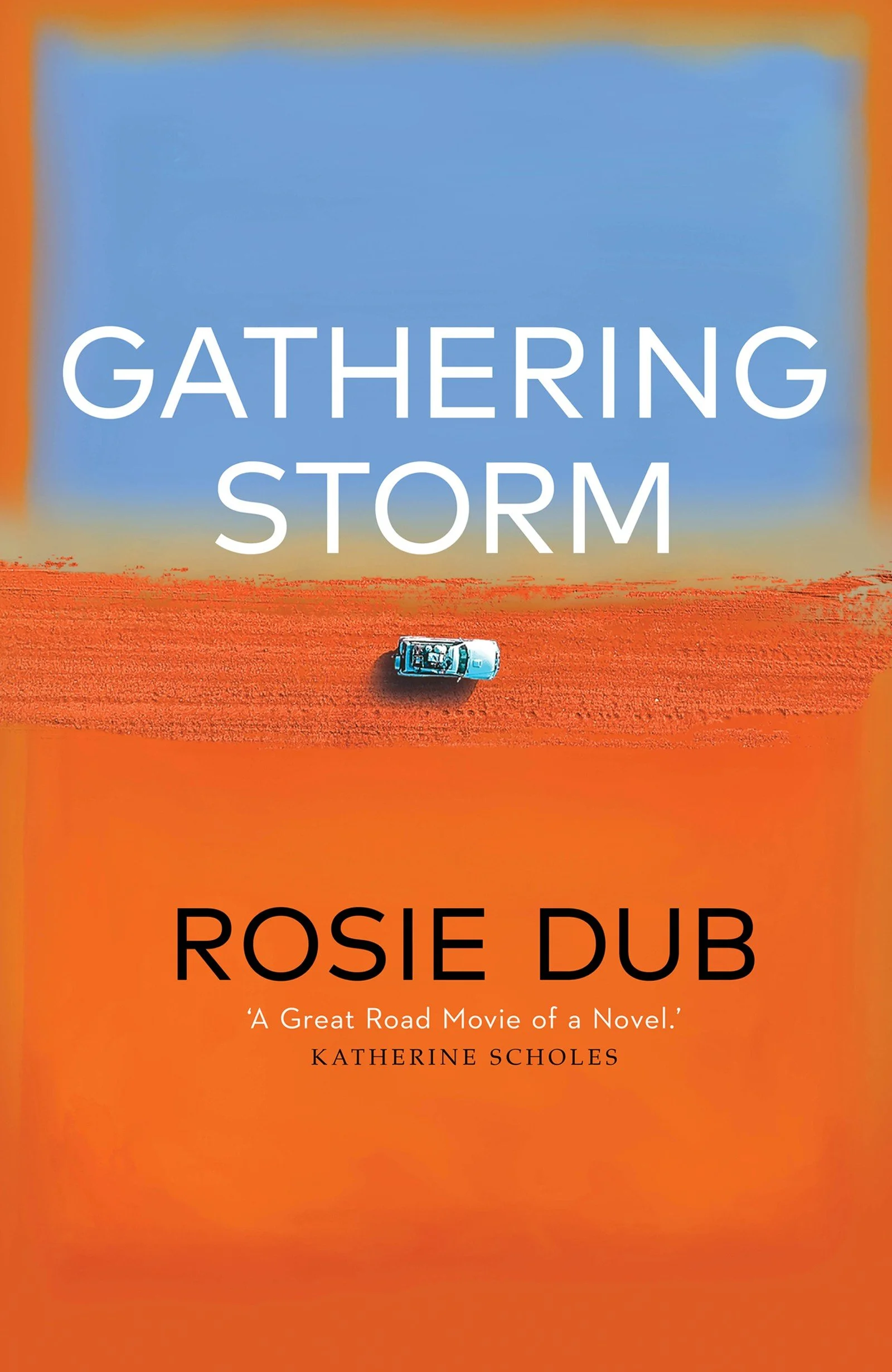
			<content:encoded><![CDATA[<p><img width="340" id="image28" alt="Gathering Storm cover" src="http://rosiedub.com/wp-content/uploads/2007/12/Gathering%20Storm%20lo-res%20cover_jpg.jpg" /></p>
<p>An unforgettable journey will unlock a lifetime of lies. . .</p>
<p>English artist Storm Cizekova grew up believing that her mother died when she was born. But then Storm finds a photo of herself in the heart of the Australian desert - and in her mother&#8217;s arms.</p>
<p>Haunted by unanswered questions, Storm embarks on a journey of self-discovery that will challenge everything she holds dear: her family history, her art, even her relationship with her partner Max. Who is she really, and where does she belong?</p>
<p>Her search will take her from the snow-covered Malvern Hills in England, to the rich red heart of the Australian outback. Retracing her mother&#8217;s footsteps through the stark beauty of the outback landscape, Storm hopes to find the courage to confront some shocking truths from her past and the strength to face her future.
</p>
]]></content:encoded>
			<wfw:commentRSS>http://rosiedub.com/?feed=rss2&amp;p=27</wfw:commentRSS>
		</item>
		<item>
		<title>Writing Matters</title>
		<link>http://rosiedub.com/?p=25</link>
		<comments>http://rosiedub.com/?p=25#comments</comments>
		<pubDate>Thu, 06 Dec 2007 02:45:42 +0000</pubDate>
		<dc:creator>rosie</dc:creator>
		
	<category>Writer</category>
	<category> Nonfiction</category>
		<guid isPermaLink="false">http://rosiedub.com/?p=25</guid>
		<description><![CDATA[ 
Excerpt
 . . . Words have power. They change people. They cause revolutions, both social and personal. They flatter, they please, they move. And they hurt. I have never believed in the old proverb &#8217;sticks and stones may break my bones but words can never hurt me.&#8217; Like many others, I learned from experience [...]]]></description>
			<content:encoded><![CDATA[<p><span lang="EN-US"> </span><br />
Excerpt</p>
<p class="MsoNormal" style="line-height: 200%"><span lang="EN-US"> . . . Words have power. They change people. They cause revolutions, both social and personal. They flatter, they please, they move. And they hurt. I have never believed in the old proverb &#8217;sticks and stones may break my bones but words can never hurt me.&#8217; Like many others, I learned from experience that like stones, words can be weapons, and they are dangerous. The wrong word can break something inside a person. A stray sentence, overheard by a child, can burrow deep, building layer upon layer of scar tissue around it, changing the course of that child&#8217;s life, so that they live every day in reaction to it. As a child I was drawn to words, but I was also afraid of them. Reading helped me to see that like stones, words can be used to create something powerful and beautiful. Much later again, I realised that like a stick used to splint a broken bone, words can also be used to heal. </span></p>
<p class="MsoNormal" style="line-height: 200%"><span lang="EN-US"> </span></p>
<p class="MsoNormal" style="line-height: 200%"><span lang="EN-US">Writing began as a source of solace in my turbulent young adult years – though looking back now, I see how turgid my creations were. But eventually I began to develop a style, a voice and a small amount of self discipline. I began to understand that writing wasn&#8217;t all about inspiration. That becoming a writer was equivalent to agreeing to a lifetime&#8217;s apprenticeship. At least 90% of writing is craft based, which involves learning many technical skills – building three dimensional characters, plotting, structuring, exposition, pace, tension, description, dialogue. . .Over time these skills developed. I wrote short stories and travel pieces – some of which were published. I completed a BA in writing and literature and then went on to do an MA in creative writing in Britain. To support myself I began assessing manuscripts for literary agents and publishers in the UK. Then, back in Australia I continued editing, taught creative writing, and eventually went back to my early love - myths and symbols. </span></p>
<p class="MsoNormal" style="line-height: 200%"><span lang="EN-US"> </span></p>
<p class="MsoNormal" style="line-height: 200%"><span lang="EN-US">Despite many setbacks, I have continued to write, with small successes – publications and grants - luring me on every time I was tempted to give up. <em>Nowhere Man</em>, my first novel, about a homeless man living on the streets of London, was a study of identity and statelessness. It found me agents in the UK and Australia, and was admired and rejected by publishers who believed it was too bleak to sell as a first novel. I wrote another novel, <em>Gathering Storm</em>, less bleak, but still exploring the same themes, this time</span> through family history and genetic inheritance, but also from a broader cultural perspective, in relation to nationhood and citizenship<span lang="EN-US">. In seeking the truth about her past, the protagonist, Storm, searches forwards in the form of a journey, backwards into history, to the source of her problems and metaphorically inwards to uncover the wounds which have formed her. As the story unfolds, Storm moves towards an understanding of psychological and physical exile and finally towards resolution of the conflicts within herself. In a way <em>Gathering Storm</em> is a coming-to-self novel. It is a work of fiction but its themes mirror my own. <a id="more-25"></a></span></p>
<p class="MsoNormal" style="line-height: 200%"><span lang="EN-US"> </span></p>
<p class="MsoNormal" style="line-height: 200%"><span lang="EN-US">All my life I have stayed close to storytelling, drawn to it in an irresistible way. Perhaps it was linked in some way to my adoption as a baby, an attempt to articulate a wound that was preverbal. Or my way of not just healing the past, but creating something beautiful from it. I can&#8217;t remember the exact moment when I realised that writing can be a healing process. It was a culmination of years of experience as a teacher, editor and writer, which made it clear to me that writing is a cathartic process for many people – a way of expelling or even just looking at the demons that haunt them. The seemingly simple act of framing a story, or understanding the motivation of a single character can challenge the foundations on which a person has lived their life. I became fascinated with the transformative potential of both the process of writing and of story itself.  Last year I began a PhD and embarked on another writing journey – this time into non fiction. My thesis, <em>Story: Mapping the Journey to Self</em>, explores the structure of stories and storytelling as metaphors for the inner journeys we make. </span></p>
<p class="MsoNormal" style="line-height: 200%"><span lang="EN-US"> </span></p>
<p class="MsoNormal" style="line-height: 200%"><span lang="EN-US">What is it that stories give us? What makes them so important in our lives? According to Christopher Vogler in his book, <em>The Writer&#8217;s Journey</em>, &#8217;stories have the power to heal, to make the world new again, to give people metaphors by which they can better understand their lives.&#8217;</span></p>
<p class="MsoNormal" style="line-height: 200%"><span lang="EN-US">As a child stories provided an escape for me and a window into other ways of living. As an adult they became a mirror in which I could explore myself.  Stories are a natural part of us, deeply embedded in our psyche. They impose order on chaos. They enable us to reach out and connect with each other. They provide us with ways of thinking about how to live within our society, helping people to place themselves in relation to the world. And they help us to make life meaningful. Through story we can understand the transitions within our lives, by looking back to see the cause and effects that have led us through time. We can identify those dramatic movements from one stage to another: childhood to adolescence, to adulthood, marriage, the birth of children. . . But we can also look forward and learn to accept through story, the inevitability of the transition into old age and ultimately, death. </span></p>
<p class="MsoNormal" style="line-height: 200%"><span lang="EN-US"> </span></p>
<p class="MsoNormal" style="line-height: 200%"><span lang="EN-US">On one level stories are pure entertainment. On another level they serve to reinforce the social order and prevailing attitudes. But on a third level, story is subversive, in that its very structure is a map of the process of becoming oneself. As both a reader and a practicing writer I have come to believe that stories are linked to personal evolution, they are metaphoric maps for the developing self. Although stories wear an infinite variety of costumes, there is a fundamental commonality between them. No matter how sophisticated our storytelling has become, how many flashes forward and backwards, how many diversions, there is still a basic structure that can be traced right back to humanity&#8217;s earliest stories - and by implication to blueprints of our common psychology. Whatever their genre or medium, many contemporary stories mirror heroic myths, both in their structure and in the elements that make up their plots. Each story involves a character leaving the safety and stasis of their ordinary world and being plunged into a new and dangerous world, one in which they don&#8217;t know the rules and where they must undergo a series of adventures. The second stage of the journey involves accepting change – stepping into the abyss with no idea what lies ahead. Like birds we must be willing to fall in order to fly. Risks are taken, and if successful there is a reward of some kind. The final stage involves returning to the &#8216;ordinary world&#8217;, understanding and integrating the reward and using it as is appropriate. A new status quo is reached and the hero has changed in some way. </span></p>
<p class="MsoNormal" style="line-height: 200%"><span lang="EN-US"> </span></p>
<p class="MsoNormal" style="line-height: 200%"><span lang="EN-US">According to Vogler, &#8216;The Hero&#8217;s Journey and the Writer&#8217;s Journey are one and the same. Anyone setting out to write a story soon encounters all the tests, trials, ordeals, joys and rewards of the Hero&#8217;s journey. . . Writing is an often perilous journey inward to probe the depths of one&#8217;s soul and bring back the Elixir of experience. &#8216; </span></p>
<p class="MsoNormal" style="line-height: 200%"><span lang="EN-US">The very act of writing is a heroic journey. It changes the writer. It is an act of faith. To write a novel is to descend into the underworld or step into the labyrinth, with only a few clues and no guarantee of a way back out again. To write a novel is to step beyond your limitation, embarking on a journey with no known destination and often no ticket. It&#8217;s a dangerous process, exhausting and filled with apprehension, but it&#8217;s also a magical journey. Aside from the joys of becoming a mother, I can think of nothing more rewarding. </span></p>
<p class="MsoNormal" style="line-height: 200%"><span lang="EN-US"> </span></p>
]]></content:encoded>
			<wfw:commentRSS>http://rosiedub.com/?feed=rss2&amp;p=25</wfw:commentRSS>
		</item>
		<item>
		<title>Impotence</title>
		<link>http://rosiedub.com/?p=23</link>
		<comments>http://rosiedub.com/?p=23#comments</comments>
		<pubDate>Tue, 18 Jul 2006 02:17:03 +0000</pubDate>
		<dc:creator>rosie</dc:creator>
		
	<category>ShortStories</category>
		<guid isPermaLink="false">http://rosiedub.com/?p=23</guid>
		<description><![CDATA[In a small, dim hospital room sits a man, his large frame awkward in the vinyl chair provided for visitors. In the bed is a woman. He watches her. His mother. Looks intently, searching for something that will make him believe this is really her. She is changed almost beyond recognition. Her body is shrunken. [...]]]></description>
			<content:encoded><![CDATA[<p><span lang="EN-US"><font size="3" face="Times New Roman">In a small, dim hospital room sits a man, his large frame awkward in the vinyl chair provided for visitors. In the bed is a woman. He watches her. His mother. Looks intently, searching for something that will make him believe this is really her. She is changed almost beyond recognition. Her body is shrunken. Sagging skin and bones. Rubble he thinks, just rubble, ready to be gathered up and disposed of. His body which is already big, feels huge. Feels like a monster, bursting out of its clothes. His knees point upwards, his elbows reach out beyond the arms of his chair. For the first time in many years his physicality seems obscene.</font></span></p>
<p><span lang="EN-US"><font size="3"><font face="Times New Roman">            Hooked onto the metal bedstead is a sign. The words scrawled casually in black felt pen. <em>Evelyn Macleod.</em> If he is to believe these words, then this is his mother. Evelyn, he thinks, sounding the word out in his head. Even her name is strange. He has never called her that. Mum, or mother, probably even mummy, when he was small enough. But he’s big now, very big, and underneath the blanket his mother’s body is almost absent. Just a skeleton, He imagines coming out of that. Her screams as his head forces it’s way into the world. Merciless, the pain unremitting, breaking her apart. It had been like that when Lily arrived and he’d watched his wife become a stranger with the pain he couldn’t share. </font></font></span></p>
<p><span lang="EN-US"><a id="more-23"></a></span></p>
<p><span lang="EN-US"><font size="3"><font face="Times New Roman">            And now there is his mother. He is at once fascinated and repelled by what little is left. A thin line of dribble stretches from the corner of her mouth down to her chin. He reaches over and wipes at it with a tissue. She doesn’t seem to notice, she’s focused inwards, eyes shut, concentrating on every breath. Without her teeth, her face is collapsed. No structure. Nothing to grip onto. When he was small people sometimes said they were alike, and once it had seemed to him that they were. There’d been no father to compare himself with and no siblings, only a few old photographs. “Look Mike”, his mother would say. “See that chin, you’re just like your grandfather.” And back then he was happy to be anchored in that way. But at some point he had changed. Suddenly become all arms and legs, dangerously uncoordinated, with a gruff voice and self conscious stoop. It was about then that his mother first accused him of looking like his father. As if it was his fault that his features were arranged one way and not another. “You’re the image of him”, she said, and turned away quickly, trying to hide her repulsion. But something had been breached. After that they were awkward with each other, too polite. Again and again he caught her staring and he didn’t understand the complexity of the things he read on her face. He remembers looking in the mirror, studying his face, searching for what it was she could see. But there was nothing, only pimples and fluff and the hurt in his eyes.   </font></font></span></p>
<p><span lang="EN-US"><font size="3"><font face="Times New Roman">            He doesn’t know how long he’s been sat here. Wonders if it’s been hours or days since the telephone woke him from a deep sleep and called him into this strange sterile nothing space they had been allocated. Why here, he thinks, wishing there were somewhere more appropriate to play out the drama of her death. Somewhere more personal. For his benefit or hers, he wonders, not knowing if she is even aware he is here. Perhaps he could creep out and get a cup of coffee, or ring someone, just to touch down, just to hear his wife&#8217;s voice, “Mike, is that you? Are you OK.” “No” he would say, “no I’m not. . .  I don’t recognise my mother.” But he is held in his place by her struggling breath. </font></font></span></p>
<p><span lang="EN-US"><font size="3"><font face="Times New Roman">            In this strangely surreal space his senses are all on alert. He listens to the distant clutter of  hospital noises. Clinking metal and rubber shoes squelching softly against the plastic floor. Lino, he thinks. We had lino. Great big black and white squares he could hop about on. Not like this grey, green, beige, impossible to name nothingness that stretched from his feet out of the door and down the corridor. He sniffs, smells the disinfectant, but underneath is another smell, faint but pervasive. Piss and shit and vomit and rot. Most of all rot. Like the rot that eats away at the insides of his mother. Or the rot that sits under the headlines of the unread newspaper at his feet. Rot everywhere. He can’t bear it. He’s desperate. For air, movement, anything, to break the disgust he feels. </font></font></span></p>
<p><span lang="EN-US"><font size="3"><font face="Times New Roman">            The cramps in his legs force him to stand and stretch. When he does, his chair makes a rude squeak, intruding on the bubble they have created. Her concentration is broken and she starts, losing the rhythm of her breathing. He wonders that something simple like this could so easily kill her and a small part of him feels tempted to extinguish the remnants of life that remain. Get it over, he thinks, but bats this thought away and paces the room, his long legs covering its width in two steps. Back and forth. Back and forth. He wants to run. Remembers the sea eagle he’d seen recently at the wildlife park he’d taken Lily to. A majestic bird. Trapped. Lily was too young to worry. “Bird”, she’d said and pointed. But he’d counted and worried and felt the waste. Two casual flicks of the wing and it reached the limits of its world. While outside, little sparrows hopped around his feet pecking greedily at his leftover lunch, unaware of the immensity of their freedom. He wants to run. Wants to stretch. His limbs feel constricted. Why, he wonders, is his grief so focused in his legs? Why can’t he cry? </font></font></span></p>
<p><span lang="EN-US"><font size="3"><font face="Times New Roman">            She always knew how he was feeling and even now at the edges of death, she reaches out her hand towards him. Her compassion fills him with shame. So she does know I am here, he thinks and reluctantly takes her hand. He is appalled at how claw like it is, but controls himself, pushing away the revulsion. Wrapped loosely around her wrist is a white plastic bracelet. He looks closely and deciphers her name. The writing is neat and round like a child&#8217;s, confirming her identity. This and the sign above her head is all that distinguishes his mother from the anonymity of death. He wants to love her. He really does. And he wonders what love is as his grief surges from his legs into his heart.  </font></font></span></p>
<p><span lang="EN-US"><font size="3"><font face="Times New Roman">            He is hungry for contact with something. Anything but this, he thinks, looking at her bony fingers still tightly gripping his. When a nurse comes, bringing him coffee and biscuits, his gratitude almost overwhelms him. He unpeels her fingers and gently places her hand on the blanket. The sound of his teeth crunching at a biscuit fills the silence and he thinks that it’s too basic, that he can’t eat biscuits when his mother is dying. So he gives up, leaving them until more nurses arrive to do their check ups and his crunching is camouflaged by chatter. Their cheeriness, he thinks, is inappropriate in the face of death. He watches them fussing around his mother, plumping up her pillows, checking her drips, her temperature, the little machine she’s attached to.  Maintenance work, he thinks, turning away red faced when they change something down there. She is limp and loose in their hands, but the grimace on her face must mean she is in pain. He wants to shout at them to be more respectful. This is my mother he wants to say, not some rag doll to toss about. Instead he asks if they can give her something more to help the pain. They shake their heads. More, they say, might kill her. He almost laughs at this. Kill her, he thinks. Kill her! His thoughts are shrill. They settle her back down on her pillows and leave. After their cheerful chatter the silence is heavy and exaggerated, filled only by her breathing which has become louder and even more infrequent, so that between each of her breaths he finds himself holding his own. </font></font></span></p>
<p><span lang="EN-US"><font size="3"><font face="Times New Roman">            When the tension becomes unbearable he reaches for the window and tugs angrily at the venetians. Suddenly the room is bathed in brightness. He shuts his eyes against the light, opens them, then looks back at her and sees that she hasn’t even noticed. She is puffing, her eyes shut, her face red with the effort of drawing breath and he is eight again maybe nine and he is running. The sun is hot, but the air is still wet, fresh from a storm. As he soars over the puddles he sees that they contain the clouds and the sky and he thinks probably space and the thought of their depth and their breadth make him dizzy with delight, not vertigo. Now it would be vertigo he thinks as he remembers swinging with Lily and feeling the rush of air turn his stomach. But it was different then. He is eight, maybe nine, everything is new and his limbs work perfectly so that he runs without effort, almost flies. There are birds. Probably seagulls because behind his speed and the rush of air around him is the regular sound of waves. Their cries punctuate his own flight. The souls of dead sailors, his Nana had told him, and for awhile he had been afraid of them. But not anymore, he isn’t afraid of anything, not even his mum.  </font></font></span></p>
<p><span lang="EN-US"><font size="3"><font face="Times New Roman">            He runs on, jumping, leaping, splashing mud, filled with joy. But it’s not a game. His mother is behind him, chasing and angry and filled with the need to punish. He is half afraid, and looks back often. She’s struggling. Her face is red, her breath is coming in painful puffs. He’s faster than her and this shocks him. He keeps running, reveling in his speed, in the ease of movement. She can’t catch him. But when he glances back again he knows that her anger is building into fury.  The joy goes from his flight and soon he slows down. Her fury builds. She thinks he’s taunting her now. But he’s not. He’s just undecided, torn between getting it over and holding onto the joy of the chase and the new knowledge of his own power. He climbs the gate into the neighbours yard, leaping easily from the top, across a puddle and onto the fresh damp grass. She follows him, climbing laboriously onto the gate, her breath forced and painful, her face dripping. Then she slips, falling heavily into the puddle and when she stands up again she’s covered with mud and water and sweat and cold hard fury. He sees all this and feels a surge of pity. It’s over now. He must allow her to win. He stops and waits and then stands stoically, arms by his sides, while she pummels at him with her fists. Beating, beating . . .beating. He can feel bruises coming, but on the other side of the pain there is no resentment. There’s something else though, something new, a huge responsibility which makes him heavy. </font></font></span></p>
<p><span lang="EN-US"><font size="3"><font face="Times New Roman">            What had he done? Broken something? Answered back?  Perhaps, but it didn’t matter. Even then it didn’t matter. The crime had been lost forever and so had his childhood. He wants to talk to his wife, wants to hear her ask, “Are you OK Mike?” And he would say, “No, I’m not. . . I don’t think I like my mother.” His face is wet with tears. But they are not for her. They are for him, for the boy he was, for the man he is, for all this unfinished business, for his useless love and for the crushing responsibility he feels for her. He is helpless against all these things. Big and useless. A giant simpleton, he thinks. He could reach out and crush her just like that. But he can’t fix her. He can’t draw her back from the brink. He wishes that he could offer up his body again. A gift for her to beat her fists against. Maybe she could pummel out the rotting that is inside her. But he can’t. And she can’t. They are both impotent against this thing that will not be turned back. </font></font></span></p>
<p><span lang="EN-US"><font size="3"><font face="Times New Roman">            He pulls the blind, dimming the room once again and lowers himself back into the small vinyl hospital chair to wait with her. It won’t be long now, he thinks. Won’t be long. </font></font></span>
</p>
]]></content:encoded>
			<wfw:commentRSS>http://rosiedub.com/?feed=rss2&amp;p=23</wfw:commentRSS>
		</item>
		<item>
		<title>Bring Me The Sky</title>
		<link>http://rosiedub.com/?p=22</link>
		<comments>http://rosiedub.com/?p=22#comments</comments>
		<pubDate>Tue, 18 Jul 2006 02:13:29 +0000</pubDate>
		<dc:creator>rosie</dc:creator>
		
	<category>ShortStories</category>
		<guid isPermaLink="false">http://rosiedub.com/?p=22</guid>
		<description><![CDATA[I’m watching the lights. . . red, yellow, green, yellow, red, green, yellow, red . . . tapping my feet, feeling the frustration rising up inside me, foul tasting like vomit. .  Thirty minutes. Thirty five minutes. . . redyellowgreenyellowredgreen. . . Forty minutes .. Tapping my feet. . . I’m going to scream. We [...]]]></description>
			<content:encoded><![CDATA[<p><span lang="EN-US"><font face="Times New Roman" size="3">I’m watching the lights. . . red, yellow, green, yellow, red, green, yellow, red . . . tapping my feet, feeling the frustration rising up inside me, foul tasting like vomit. .  Thirty minutes. Thirty five minutes. . . redyellowgreenyellowredgreen. . . Forty minutes .. Tapping my feet. . . I’m going to scream. We edge forward, Maddy cheers in the backseat and I laugh, the frustration subsiding for a minute. But we’re still stuck, can’t go backwards or forwards, can’t turn around. I  imagine pressing a button and wings sprouting from the sides, we’d fly past everybody, straight into the supermarket. </font></span></p>
<p><span lang="EN-US"><font size="3"><font face="Times New Roman">            ‘How’d that be Maddy?’ I ask. </font></font></span></p>
<p><span lang="EN-US"><font face="Times New Roman" size="3">In the rearview mirror I see her smile, but she’s intent on something else and when I turn round she’s playing with the door locks, opening them. </font></span></p>
<p><span lang="EN-US"><font size="3"><font face="Times New Roman">            ‘Shut it’, I shout. Terrified someone will open her door and drag her away from me. That’s what happens here in the endless traffic jams, disaffected people opening doors, smashing windows, bashing drivers, stealing bags. . . maybe even children.</font></font></span></p>
<p><span lang="EN-US"><a id="more-22"></a></span></p>
<p><span lang="EN-US"><font face="Times New Roman" size="3"><span lang="EN-US"><span lang="EN-US"><font face="Times New Roman" size="3">Forty five minutes. . . This is serious. It only takes twenty to walk. These road works have been going for months, and months. Bottle necks, blocked drains, cars everywhere, people stewing inside their little metal boxes. Fingers tapping steering wheels, feet playing with the pedals, changing radio stations, fuming, steam, rage . . .</font></span></span></font></span><font face="Times New Roman" size="3"><span lang="EN-US"><span lang="EN-US"><font size="3"><font face="Times New Roman">            The locks are still going up and down and I can’t help it anymore. I’m going to scream.</font></font></span></span></font><font face="Times New Roman" size="3"><span lang="EN-US"><span lang="EN-US"><font size="3"><font face="Times New Roman">            ‘For fucks sake, shut it.’</font></font></span></span></font><font face="Times New Roman" size="3"><span lang="EN-US"><span lang="EN-US"><font face="Times New Roman" size="3">In the silence that comes before her tears I’m already regretting and I’m thinking that being a mother is all about regrets and responsibilities and never being able to forget anything anymore, except yourself. It’s yourself that’s so hard to remember. So I’m regretting and trying to avoid the looks of the people in the car in front who’ve heard me scream and who no doubt wonder about me. </font></span></p>
<p></span><span lang="EN-US"><font face="Times New Roman" size="3"><span lang="EN-US"><span lang="EN-US"><font face="Times New Roman" size="3">Maddy’s crying. She doesn’t cry quietly. It’s all noisy sobs and intermittent howls. I glance nervously in the rearvision mirror at the line of cars behind. Stern faces staring back. None of their God damned business, but I’m filled with shame. Please, don’t let them be from Social Services. Just the name makes my hair stand on end. That’s what’s happening here. Everyone&#8217;s telling on everyone. And mud sticks, that’s what mum always said. There’s no going back. </font></span></span></font></span><font face="Times New Roman" size="3"><span lang="EN-US"><span lang="EN-US"><font size="3"><font face="Times New Roman">            ‘I’m sorry.’</font></font></span></span></font><font face="Times New Roman" size="3"><span lang="EN-US"><span lang="EN-US"><font face="Times New Roman" size="3">I can hear the regret and the resignation in my voice. But most of all I can hear how tired I am and how tight. All wound up inside like something’s going to go bing. </font></span></span></font><font face="Times New Roman" size="3"><span lang="EN-US"><span lang="EN-US"><font face="Times New Roman" size="3">The howls continue. I try again.</font></span></p>
<p></span><span lang="EN-US"><font size="3"><font face="Times New Roman">            ‘Mummy’s sorry Maddy, she didn’t mean it.’ </font></font></span></p>
<p><span lang="EN-US"><font face="Times New Roman" size="3">The third person makes it easier, distances it from me. It’s just that naughty old mummy again.</font></span></p>
<p><span lang="EN-US"><font size="3"><font face="Times New Roman">            ‘Mummy’s upset because we’re stuck in a traffic jam.’</font></font></span></p>
<p><span lang="EN-US"><font face="Times New Roman" size="3">The sobs subside.</font></span></p>
<p><span lang="EN-US"><font size="3"><font face="Times New Roman">            ‘You scared me mummy.’</font></font></span></p>
<p><span lang="EN-US"><font size="3"><font face="Times New Roman">            ‘I know sweetheart. I’m sorry.’</font></font></span></p>
<p><span lang="EN-US"><font face="Times New Roman" size="3">I can’t even hug her. She’s all that way from me, strapped into her seat and I can’t reach. In the mirror I watch her pulling her face together. Being brave. And my heart breaks at how little she is. </font></span></p>
<p><span lang="EN-US"><font face="Times New Roman" size="3"><span lang="EN-US"><span lang="EN-US"><font size="3"><font face="Times New Roman">Fifty minutes.    </font></font></span></span></font></span><font face="Times New Roman" size="3"><span lang="EN-US"><span lang="EN-US"><font size="3"><font face="Times New Roman">            ‘Are we in a jam mummy?’</font></font></span></span></font><font face="Times New Roman" size="3"><span lang="EN-US"><span lang="EN-US"><font face="Times New Roman" size="3">I sigh, here we go again.</font></span></span></font><font face="Times New Roman" size="3"><span lang="EN-US"><span lang="EN-US"><font size="3"><font face="Times New Roman">            ‘Yes,’ I say, on queue</font></font></span></p>
<p></span><span lang="EN-US"><font size="3"><font face="Times New Roman">            ‘Strawberry jam, mummy?’</font></font></span></p>
<p><span lang="EN-US"><font face="Times New Roman" size="3">She giggles. A first joke. Worn out with usage. But I laugh too, it’s better than tears.</font></span></p>
<p><span lang="EN-US"><font face="Times New Roman" size="3"><span lang="EN-US"><span lang="EN-US"><font size="3"><font face="Times New Roman">We move a few feet, edging up alongside the trucks.     </font></font></span></span></font></span><font face="Times New Roman" size="3"><span lang="EN-US"><span lang="EN-US"><font size="3"><font face="Times New Roman">            ‘Look mummy, look, there’s a digger.’  </font></font></span></span></font><font face="Times New Roman" size="3"><span lang="EN-US"><span lang="EN-US"><font face="Times New Roman" size="3">Maddy’s excited and so am I. We’ve moved, there’s hope yet. I break into song. </font></span></span></font><font face="Times New Roman" size="3"><span lang="EN-US"><span lang="EN-US"><font size="3"><font face="Times New Roman">            <em>They’re digging a hole in the road, they’re digging a hole in the road.<br />
</em></font></font></span><em><span lang="EN-US"><font size="3"><font face="Times New Roman">            You can’t go up, you can’t go down. You’ll have to wait and drive around. . .<br />
</font></font></span></em><span lang="EN-US"><font size="3"><font face="Times New Roman">Maddy sings too in her little high pitched squeak and we’re friends again, laughing together. The people behind are still staring. Maybe they think I’m a lunatic, or maybe there’s just nowhere else to look.  </font></font></span></p>
<p></span><span lang="EN-US"><font face="Times New Roman" size="3"><span lang="EN-US"><span lang="EN-US"><font face="Times New Roman" size="3">I shut my eyes and imagine putting my foot down onto the accelerator, speeding along an empty highway, the wind roaring, blowing hard in my face. Somehow when I imagine this the wind is blowing but in reality I’ve always had the window shut. No wind, always the engine, sometimes music. Road music. Tearing through space. Space. . .  space. . . I open my eyes, hoping, but we’re still here. </font></span></span></font></span><font face="Times New Roman" size="3"><span lang="EN-US" /><span lang="EN-US"><font face="Times New Roman" size="3"><span lang="EN-US"><span lang="EN-US"><font face="Times New Roman" size="3">Fifty five minutes. We move on again, inching our way to the roundabout. Approaching it I can feel my fingers itching, my feet twitching. Something unexpected is going to happen. And sure enough when we get there, instead of turning left I swing around to the right. </font></span></span></font></span><font face="Times New Roman" size="3"><span lang="EN-US"><span lang="EN-US"><font size="3"><font face="Times New Roman">            ‘Shop’s that way,’ says Maddy, pointing behind her.</font></font></span></span></font></font><font face="Times New Roman" size="3"><font face="Times New Roman" size="3"><span lang="EN-US"><span lang="EN-US"><font face="Times New Roman" size="3">There’s space on the road in front of me. I push my foot down and feel the welcome roar of the engine. </font></span></span></font></font><font face="Times New Roman" size="3"><font face="Times New Roman" size="3"><span lang="EN-US"><span lang="EN-US"><font size="3"><font face="Times New Roman">            ‘We’re not going to the supermarket,’ I say. </font></font></span></p>
<p></span><span lang="EN-US"><font face="Times New Roman" size="3">Maddy doesn’t know whether to smile or cry. Her eyes are still shiny wet from earlier. They look puzzled. </font></span></p>
<p><span lang="EN-US"><font size="3"><font face="Times New Roman">            ‘Where we going mummy?’</font></font></span></p>
<p><span lang="EN-US"><font face="Times New Roman" size="3">But I don’t know. Not home. I couldn’t bear it. Tucked up inside our little flat, surrounded by other little flats and roads everywhere all packed with traffic. A big stinking stew. </font></span></p>
<p><span lang="EN-US"><font face="Times New Roman" size="3"><span lang="EN-US"><span lang="EN-US"><font size="3"><font face="Times New Roman">I think about holidays. About being young. Smoking, drinking, being stoned. About staying up late and watching the sun coming up. And how the future seemed forever away. Back then the world moved with me in long, loping rhythms. Now the rhythm is gone or it’s different. Moved into something I don’t recognise. Everything is jagged and confused.  </font></font></span></span></font></span><font face="Times New Roman" size="3"><span lang="EN-US"><span lang="EN-US"><font size="3"><font face="Times New Roman">            ‘Mummy?’</font></font></span></span></font><font face="Times New Roman" size="3"><span lang="EN-US"><span lang="EN-US"><font face="Times New Roman" size="3">Maddy’s still there and her little face is anxious. </font></span></span></font><font face="Times New Roman" size="3"><span lang="EN-US"><span lang="EN-US"><font size="3"><font face="Times New Roman">            ‘I don’t know,’ I say, ‘I’ll think of something.’</font></font></span></p>
<p></span><span lang="EN-US"><font face="Times New Roman" size="3">Maddy’s face screws up.</font></span></p>
<p><span lang="EN-US"><font size="3"><font face="Times New Roman">            ‘I want supermarket,’ she says, ‘I want apple. I want trolley. . I want. . .’</font></font></span></p>
<p><span lang="EN-US"><font face="Times New Roman" size="3">I want I want I want.</font></span></p>
<p><span lang="EN-US"><font size="3"><font face="Times New Roman">            ‘SHUT UP!’</font></font></span></p>
<p><span lang="EN-US"><font face="Times New Roman" size="3">My face is fierce. I can feel it twisted and set, like the wind’s changed and I can’t move it back. Maddy’s confused. She’s quiet. Shocked into silence for awhile. And then. . . </font></span></p>
<p><span lang="EN-US"><font size="3"><font face="Times New Roman">            ‘Mummy, mumma, mamma, mum, mum, mummy. . .’ </font></font></span></p>
<p><span lang="EN-US"><font face="Times New Roman" size="3">She’s practicing with what’s known, practicing language. Over and over. Making me into a mantra. I sigh. Then turn, left and right, left again, trying to find a rhythm, a purpose, trying to drive away from myself. Then I see a big blue sign and suddenly I know what we’re doing. </font></span></p>
<p><span lang="EN-US"><font size="3"><font face="Times New Roman">            We’re going to the seaside Maddy.’  </font></font></span></p>
<p><span lang="EN-US"><font size="3"><font face="Times New Roman">            ‘Yay!’ she cries, ‘Yay!’ Jumping up and down in her seat, her eyes sparky, looking everywhere for the sea. </font></font></span></p>
<p><span lang="EN-US"><font size="3"><font face="Times New Roman">            ‘Now for the bad news,’ I say. ‘We’re not there yet.’ </font></font></span></p>
<p><span lang="EN-US"><font size="3"><font face="Times New Roman">            ‘Nearly there mummy?’</font></font></span></p>
<p><span lang="EN-US"><font size="3"><font face="Times New Roman">            ‘No, not for ages and ages and ages and ages . . .’ </font></font></span></p>
<p><span lang="EN-US"><font face="Times New Roman" size="3"><span lang="EN-US"><span lang="EN-US"><font face="Times New Roman" size="3">It takes longer than I imagined. Maddy’s fidgeting in the back. I’ve sung every nursery rhyme I can think of and now we’re running out of games. </font></span></span></font></span><font face="Times New Roman" size="3"><span lang="EN-US"><span lang="EN-US"><font size="3"><font face="Times New Roman">            ‘Nearly there?’ she asks hopefully.</font></font></span></span></font><font face="Times New Roman" size="3"><span lang="EN-US"><span lang="EN-US"><font size="3"><font face="Times New Roman">            ‘Nearly,’ I say. ‘Shall we play the ‘where’s Maddy game’? </font></font></span></span></font><font face="Times New Roman" size="3"><span lang="EN-US"><span lang="EN-US"><font size="3"><font face="Times New Roman">            ‘Yay,’ she says and pulls her hat over her eyes. </font></font></span></p>
<p></span><span lang="EN-US"><font size="3"><font face="Times New Roman">            ‘Where’s Maddy? Is she under the seat?’</font></font></span></p>
<p><span lang="EN-US"><font size="3"><font face="Times New Roman">            ‘No.’</font></font></span></p>
<p><span lang="EN-US"><font size="3"><font face="Times New Roman">            ‘Is she on Mummy’s lap?’</font></font></span></p>
<p><span lang="EN-US"><font size="3"><font face="Times New Roman">            ‘No.’</font></font></span></p>
<p><span lang="EN-US"><font size="3"><font face="Times New Roman">            ‘Is she on the roof?’</font></font></span></p>
<p><span lang="EN-US"><font size="3"><font face="Times New Roman">            ‘Noooo.’ Maddy breaks into giggles.</font></font></span></p>
<p><span lang="EN-US"><font size="3"><font face="Times New Roman">            ‘I know. She’s under that hat.’</font></font></span></p>
<p><span lang="EN-US"><font size="3"><font face="Times New Roman">            ‘Yes!’ she shouts. </font></font></span></p>
<p><span lang="EN-US"><font face="Times New Roman" size="3"><span lang="EN-US"><span lang="EN-US"><font size="3"><font face="Times New Roman">            ‘Nearly there mummy?’ </font></font></span></span></font></span><font face="Times New Roman" size="3"><span lang="EN-US"><span lang="EN-US"><font size="3"><font face="Times New Roman">Maddy’s starting to whimper. It’s tea time and she’s hungry. She’s been sitting still too long and needs to run off all her energy. We both do. Need to get stuff out. And in, I think, hearing my stomach rumble.  </font></font></span></span></font><font face="Times New Roman" size="3"><span lang="EN-US"><span lang="EN-US"><font size="3"><font face="Times New Roman">            ‘Not far,’ I say.</font></font></span></span></font><font face="Times New Roman" size="3"><span lang="EN-US"><span lang="EN-US"><font face="Times New Roman" size="3">I turn a corner and there it is. </font></span></p>
<p></span><span lang="EN-US"><font size="3"><font face="Times New Roman">            ‘Look Maddy. Look! The sea.’</font></font></span></p>
<p><span lang="EN-US"><font size="3"><font face="Times New Roman">            ‘Yay,’ she shouts, staring uncertainly at the vast, surging, grey water. </font></font></span></p>
<p><span lang="EN-US"><font face="Times New Roman" size="3"><span lang="EN-US"><span lang="EN-US"><font face="Times New Roman" size="3">I find a park and rummage for change to put in the meter. Outside the wind is cold and cuts right through my clothes. I lift Maddy out and pull my jumper over her head. She’s lost in it and jumps about excitedly, flapping the long empty sleeves in the air. We walk along the pier and I look up and around, but never down and I hold on tight to Maddy’s hand, because any minute the wind might lift her up and drop her into the sea below. But Maddy is free of fear. She wriggles free and skips ahead, from one edge to another, so small she could slip between the barrier, and my heart skips too, with each awful possibility. Back on the beach we pick our way through pebbles and deck-chairs and play chasey with the waves until our feet squelch in our shoes. Then we throw pebbles into the water, trying to make them skip, but they all sink. </font></span></span></font></span><font face="Times New Roman" size="3"><span lang="EN-US"><span lang="EN-US"><font size="3"><font face="Times New Roman">            ‘Plop’, shouts Maddy each time. ‘Plop, plop, plop.’</font></font></span></span></font><font face="Times New Roman" size="3"><span lang="EN-US" /><span lang="EN-US"><font face="Times New Roman" size="3"><span lang="EN-US"><span lang="EN-US"><font face="Times New Roman" size="3">We buy steaming fish and soggy chips with tomato sauce and icy cold, fizzy lemonade and chocolate bars, and we eat until we can’t eat anymore and then feed the rest to the squawking gulls around our feet and circling our heads, and all the time I can feel something inside slowing uncoiling. </font></span></span></font></span><font face="Times New Roman" size="3"><span lang="EN-US"><span lang="EN-US"><font size="3"><font face="Times New Roman">            ‘We is having fun mummy,’ Maddy announces solemnly.</font></font></span></span></font><font face="Times New Roman" size="3"><span lang="EN-US"><span lang="EN-US"><font size="3"><font face="Times New Roman">            ‘Are,’ I say automatically. Then I see that she’s shivering, so I wrap my arms around he. She snuggles into me and we’re quiet together for a few moments, until she spots the playground. </font></font></span></span></font></font><font face="Times New Roman" size="3"><font face="Times New Roman" size="3"><span lang="EN-US"><span lang="EN-US"><font size="3"><font face="Times New Roman">            ‘Swing,’ she shouts, shaking me off impatiently. ‘Swing.’</font></font></span></p>
<p></span><span lang="EN-US"><font face="Times New Roman" size="3">I strap her in and push.</font></span></p>
<p><span lang="EN-US"><font size="3"><font face="Times New Roman">            ‘Higher mummy. Higher.’ </font></font></span></p>
<p><span lang="EN-US"><font face="Times New Roman" size="3">So I swing her higher and higher and higher, until I’m scared she’ll go right over. Her face is red with the stinging cold and she’s gulping down great mouthfuls of air, but she’s still smiling and shouting.</font></span></p>
<p><span lang="EN-US"><font size="3"><font face="Times New Roman">            ‘Bring me the sky, bring me the sky. . .’</font></font></span></p>
<p><span lang="EN-US"><font face="Times New Roman" size="3">And the swing goes even higher until there’s just Maddy, bright against the clouds, laughing out loud at the bigness of everything. </font></span></p>
<p><span lang="EN-US"><font face="Times New Roman" size="3"><span lang="EN-US"><span lang="EN-US"><font face="Times New Roman" size="3">When the rain starts I’ve had enough. </font></span></span></font></span><font face="Times New Roman" size="3"><span lang="EN-US"><span lang="EN-US"><font size="3"><font face="Times New Roman">            ‘Time to go,’ I say.</font></font></span></span></font><font face="Times New Roman" size="3"><span lang="EN-US"><span lang="EN-US"><font size="3"><font face="Times New Roman">            ‘No,’ she shouts, shaking her head furiously. She’s making a stand, but the joy has gone out of it for her.</font></font></span></span></font><font face="Times New Roman" size="3"><span lang="EN-US"><span lang="EN-US"><font size="3"><font face="Times New Roman">            ‘Yes.’</font></font></span></p>
<p></span><span lang="EN-US"><font size="3"><font face="Times New Roman">            ‘No!’</font></font></span></p>
<p><span lang="EN-US"><font size="3"><font face="Times New Roman">            ‘Come on Maddy,’ I plead. ‘Come on sweetheart. You’ll get wet and catch cold.’</font></font></span></p>
<p><span lang="EN-US"><font size="3"><font face="Times New Roman">            ‘Okay.’</font></font></span></p>
<p><span lang="EN-US"><font face="Times New Roman" size="3">She lets me lift her out, but she won’t walk, so I sit her on my shoulders and walk slowly back through the rain. In the car it’s warm and still. Outside it’s getting dark and still raining and the streets are nearly empty. I start the engine and turn the car away from the seaside. The lights shine in bright lines on the road and the car swishes through the water. We could be anywhere. It’s quiet too, except for the motor and the swishing and the regular squeak of the windscreen wipers.</font></span></p>
<p><span lang="EN-US"><font face="Times New Roman" size="3"><span lang="EN-US"><span lang="EN-US"><font face="Times New Roman" size="3">Maddy’s sleepy now, and content. </font></span></span></font></span><font face="Times New Roman" size="3"><span lang="EN-US"><span lang="EN-US"><font size="3"><font face="Times New Roman">            ‘I like you mummy.’</font></font></span></span></font><font face="Times New Roman" size="3"><span lang="EN-US"><span lang="EN-US"><font size="3"><font face="Times New Roman">            ‘I like you too Maddy.’</font></font></span></span></font><font face="Times New Roman" size="3"><span lang="EN-US"><span lang="EN-US"><font size="3"><font face="Times New Roman">            ‘You’re my friend.. . I got lots of friends.’ </font></font></span></p>
<p></span><span lang="EN-US"><font size="3"><font face="Times New Roman">            ‘You have,’ I say.</font></font></span></p>
<p><span lang="EN-US"><font size="3"><font face="Times New Roman">            ‘I love everyone Mummy. . . Do you?</font></font></span></p>
<p><span lang="EN-US"><font face="Times New Roman" size="3">I hesitate. Steer my mind away from things. Torn. I’m fearful of her childish trust, yet more than anything I want to keep it safe for her. </font></span></p>
<p><span lang="EN-US"><font size="3"><font face="Times New Roman">            ‘I love lots of people sweetheart,’ I say. </font></font></span></p>
<p><span lang="EN-US"><font face="Times New Roman" size="3"><span lang="EN-US"><span lang="EN-US"><font face="Times New Roman" size="3">When I look back she’s asleep. Her head tilted slightly, resting against the baby seat. I take little glimpses, back and forth, from the road ahead, to my daughter behind. Her mouth is open, there’s chocolate smeared on her chin, her eyebrows make two smooth arcs across her face, her hair is wet, windswept and tangled. She’s perfect. And I want it to stay this way forever. Just me and Maddy. And the car cutting through space. </font></span></span></font></span><font face="Times New Roman" size="3"><span lang="EN-US" /></font><font face="Times New Roman" size="3"><span lang="EN-US"> </span></font><font face="Times New Roman" size="3"><span lang="EN-US"></p>
<p /></span></font></font></font></font></font></font></font></font></font></font></font></font></font></font>
</p>
]]></content:encoded>
			<wfw:commentRSS>http://rosiedub.com/?feed=rss2&amp;p=22</wfw:commentRSS>
		</item>
		<item>
		<title>Passing Time</title>
		<link>http://rosiedub.com/?p=21</link>
		<comments>http://rosiedub.com/?p=21#comments</comments>
		<pubDate>Sat, 15 Jul 2006 01:33:16 +0000</pubDate>
		<dc:creator>rosie</dc:creator>
		
	<category> Nonfiction</category>
		<guid isPermaLink="false">http://rosiedub.com/?p=21</guid>
		<description><![CDATA[The silent dark is broken by the padding of feet, drawing me slowly out of the depths of dreaming. The bedroom door opens a fraction, letting in a thin rectangle of light, then closes, drawing out the light once again. Something else has slipped in with the light. I strain my ears, listening for clues, [...]]]></description>
			<content:encoded><![CDATA[<p>The silent dark is broken by the padding of feet, drawing me slowly out of the depths of dreaming. The bedroom door opens a fraction, letting in a thin rectangle of light, then closes, drawing out the light once again. Something else has slipped in with the light. I strain my ears, listening for clues, but there’s only a sixth sense of another presence. Then comes a sigh, softer than the gentlest breeze, and a small sleepy body slips in beside me. Inside the covers, a cold foot presses on my belly.</p>
<p>On winter mornings the darkness lingers. I expect my children to wake with the light, later each morning, until the solstice, but that isn’t what happens. Instead they wake early, 6am, 5am, sometimes even 4am, and shuffle around the house in the cold, waiting for the sun, expecting breakfast and stories and warm fires from me. Every winter I make up rules. Tell them they mustn’t wake so early. Tell them it isn’t fair. Tell them I won’t. But I always do.</p>
<p>They try. For minutes at a time they hold back their restless energy and lie in bed, searching their senses for morning clues. They listen for the stillness before dawn, the distant rush of cars, birds stirring, a change in the feel of things. . . They listen until the exquisite pain of anticipation propels them out of bed and into the new day.</p>
<p><a id="more-21"></a></p>
<p>This morning though, I am given a reprieve. My son’s breath is steady, his mouth open, sleep has claimed him once again. It’s still dark and will be for hours yet. But I am awake now and restless. I need the toilet. My arm is going numb where his head lies, cutting off my circulation. For a moment I wonder about that, how much heavier we become in sleep. How much there is inside our heads. How much we don’t use. I think about weight too, how there are different kinds of weight. The sort we measure on a scale, and the other sort. The heaviness that some people carry around them – their shadows filled with the past. I’m restless, but I’m putting off the inevitable. Whoever heard of waking a sleeping child? My oldest daughter cries out and I tense, then wait poised, but it’s quiet again. A passing fear.</p>
<p>There is nothing heavy about my children, no shadows weighing them down, and I wish I could always keep it this way. I wish I could ward off the troubles of life, keep them safe and pure. . . but we each have our own journeys to make and I am here only to guide them. Often though, I suspect they are already wiser than me. I tell time by my children, counting the moments I still have. They tell time by embracing life. Days, months, years, slip through my fingers, while they fill each moment with themselves. I reach back into the past, strain forward into the future. They live in the now. The way one should.</p>
<p>I lie awake, feeling the weight of my own shadows, my mind flitting from one thought to the next. I worry about a conversation I had yesterday. Why did I say that? I plan dinner, write a shopping list in my head, think about the bills, relive a conversation with my mother, one I’ve never yet had but probably should, panic about outfits for the school fancy dress ball, nudge my husband until he stops snoring and feel guilty because I’m not up already, using this rare solitary time for something more useful. But what sweet comfort, to be sandwiched gently between my husband and my son on this cold morning, feeling my son’s breath warm upon my cheek. How could I possibly regret anything so precious?</p>
<p>It’s no good though, my arm is hurting and I have to move it. I try to do this gently, hoping I can slip it out from under my son’s head without disturbing him. But he wakes and smiles at me, a face so clear I can see it in the almost dark.</p>
<p>‘Best mum,’ he says.</p>
<p>Then.</p>
<p>‘Mummy, lets talk about mysteries.’</p>
<p>‘Mysteries?’</p>
<p>He’s sitting up, eyes bright, mind spinning with possibilities and I’m amazed at how smooth his transition is between sleeping and waking. I’m slow, dragging myself out of unconsciousness, grasping uselessly at my dreams which slip effortlessly away, tantalisingly out of reach. My brain stays fuddled, but he’s bright. He’s here. Now. And I want him to always be like that.</p>
<p>‘You know. . Infinite space, imaginary numbers. . . What’s underneath a whirlpool?. . . Inside a blackhole?</p>
<p>I think about blackholes. How scary they sound, the way they absorb energy, their appetite insatiable. Humanity is like that, sucking up the earth’s energy. And there are individuals too, those people we call vampires, who deplete others of their life energy, sucking, sucking, trying to fill the empty space inside themselves. The more they suck the hungrier they are, that’s the irony of it. But for every vampire there is someone who radiates positive energy. Someone to whom others gravitate.</p>
<p>‘Mum,’ says my son, nudging me.</p>
<p>‘Most galaxies,’ I tell him, ‘have a supermassive black hole in their centre, a bit like a giant plug hole. Some of them are as big as billions of suns put together.’</p>
<p>His eyes are wide with wonder.</p>
<p>‘Is that as big as infinity?’ he asks.</p>
<p>‘No, infinity is bigger than anything.’</p>
<p>‘Like families,’ he says.</p>
<p>‘Families?’ I ask, puzzled, then wait while he thinks, loving the little furrow on his forehead and the far away look in his eyes.</p>
<p>‘The way they go on forever, both ways. . . grandma and great grandma and us . . and then we’ll have kids. . . and so will they. . .’</p>
<p>Slowly it’s dawning on me, the beautiful thing that my son has achieved. He’s connected space and time with infinity.</p>
<p>‘Yes!’ I say. ‘Yes, that’s exactly it.</p>
<p>Then I clamour about in my memory for more wonders to feed my insatiable son.</p>
<p>‘As the stars and planets get closer to it they speed up, faster and faster, and when they speed up like that, then time speeds up too, until a year is only twenty or thirty days. . . Imagine that, you’d have a birthday every few weeks.’</p>
<p>He laughs out loud at this and then is quiet again. He’s counting, calculating the present potential.</p>
<p>‘And there’s a theory that these supermassive black holes shoot out jets of matter, sometimes millions of light years long. . . ‘</p>
<p>‘Why?’</p>
<p>‘I don’t know. Perhaps they throw up the bits they don’t want. Or maybe they recycle all the old negative energy and spit out fresh clean matter. Isn’t that a lovely thought.’</p>
<p>My son is quiet, he’s storing it, a special sweet to savour. I know he wants more, but already I’ve reached the limits of my black hole knowledge and my daughters are waking. The stillness is being taken over by activity: lights flicking on and off, the toilet flushing, someone blowing their nose. It’s time to get up. Reluctantly I leave the warmth of my bed for the shock of a cold toilet seat. Then fumble about in the dark looking for slippers, woolly socks and a jacket. The chores are about to begin: breakfast, packed lunches, teeth, faces, clean undies, shoe laces. . . But first there’s the frosty trip outside for wood, the grass frozen solid, crunching under my feet, as I breathe steamy dragon breaths and ignore my shivering for long enough to stand staring up at the Milky Way, wondering at the universe once again after all these years of forgetting. . .</p>
<p>Another gift from my children.</p>
<p>All day</p>
<p>I hold them close.
</p>
]]></content:encoded>
			<wfw:commentRSS>http://rosiedub.com/?feed=rss2&amp;p=21</wfw:commentRSS>
		</item>
	</channel>
</rss>