Published February 2012 Fourth Estate
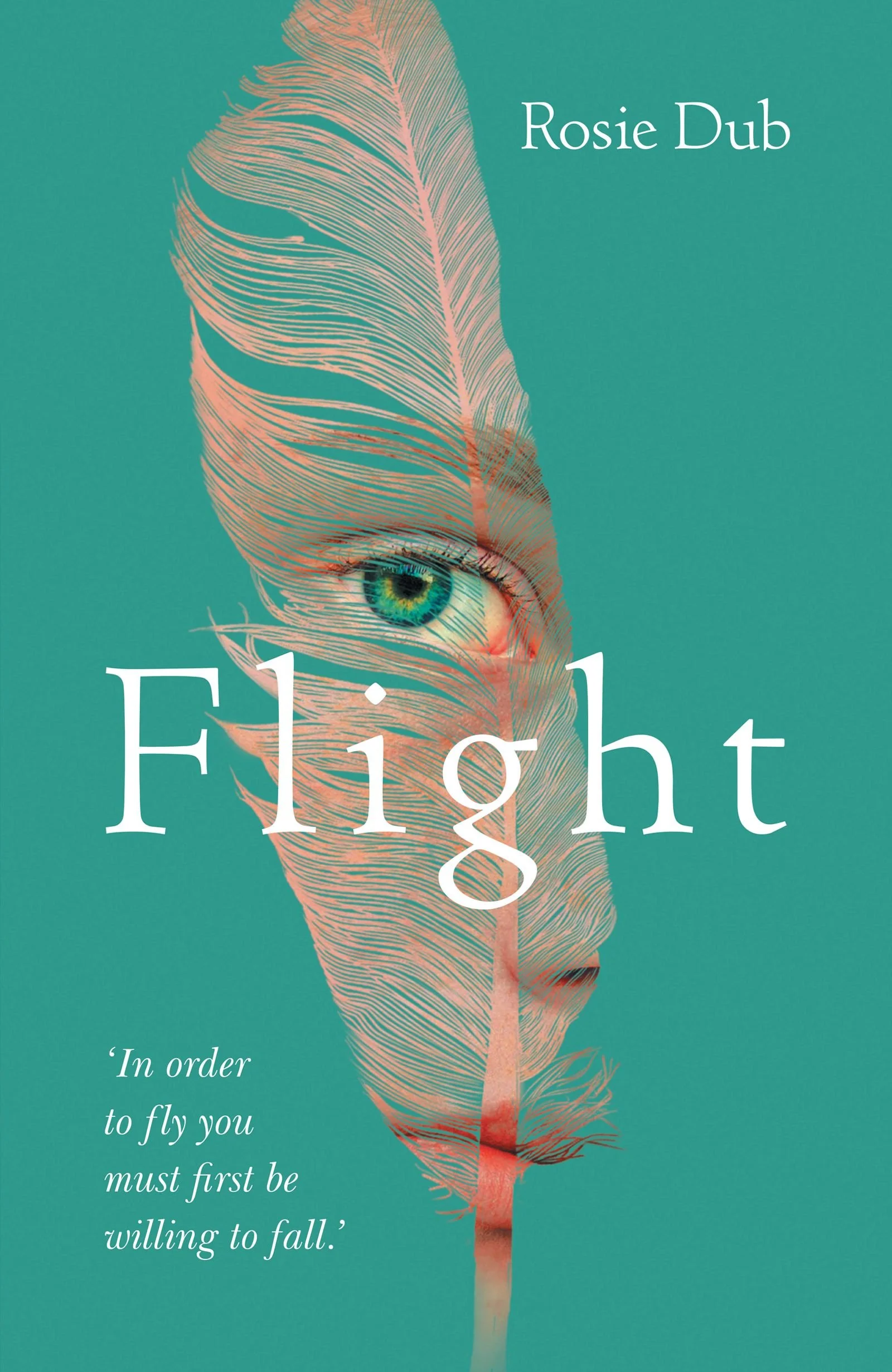
Synopsis of my new novel, ‘Flight’
‘That one will be the death of her father … Mark my words, the death of him.’
So says the prophecy that accompanies Fern’s birth. Her mother, fearing the wrath of the baby’s father, is forced to give Fern up for adoption.
Twenty years later Fern is haunted by the feeling that something is very wrong. Her family and friends think she is losing her mind, but Fern is convinced that someone is after her.
Seeking to unlock the mystery, Fern takes flight onto the streets of Sydney, where she meets two unlikely allies: Cassie, a woman cursed with the gift of clairvoyance, and Adam, an ex-soldier tormented by his past. As danger looms, Fern and Adam embark on an adventure which takes them far into the labyrinthine depths of the Tasmanian wilderness, where Fern must finally confront her demons.
Interwoven with myth and metaphor, Flight is a compelling and original story; sometimes eerie, sometimes earthy, always spellbinding.
‘An adventure story that encapsulates both a physical and spiritual journey … interesting and original … with some startling contrasts between the ordinary and extraordinary’
Bookseller + Publisher
Prologue to my new novel, ‘Flight’
I came early, slithering into the outside world and into safety, or so I hoped. But this was to be the first of many hopes, all dashed against the brutally sharp edges of reality.
As in all great myths, my birth was accompanied by a prophecy. I, it seemed, would be the death of my father. How this was to come about no one could say. But the prophecy was there, it escaped from the mouth of Simple Simon, the old gardener at the Botanic Gardens in Adelaide where my mother often went to sit in her lunch hour.
On this particular day she was waiting to meet my father. He was late and the pregnant girl felt a persistent nagging worry. There was something big hovering around the edges of things, a sense that life had woken up that morning slightly askew. Nothing she could put her finger on, but it was enough to make her nervous. And then there were the contradictions: worry that he would come, worry that he wouldn’t. Fear and love tugging her between them until all she could feel was a tearing anxiety. You see, my father was a strong willed man, older than her, but still too young he said, to be tied down like this. He would have walked away but he was snared by his desire for my mother. She was beautiful and fragile and needy, easy to bully but also detached in a way that he could never put a finger on. This detachment was what kept him there, waiting, wanting her to surrender completely.
It was summer but there was an unexpected chill in the air. The wind was a fresh south easterly, not the usual hot northerly that stirred up dust and discomforts, and the sky was clear enough to make everyone’s heart lift. Even my mother’s, the seventeen-year-old girl with the rounded belly who sat on a bench chewing a deviled-egg sandwich and watching Simon methodically plant a row of violets, a flurry of chattering birds surrounding him.
When a magpie greedily pecked Simon’s finger, perhaps thinking it a fat juicy worm, my mother forgot her troubles for a moment and laughed. Simon looked up, directly at her, and her laughter quickly turned into a shudder. Where one eye should have been there was a socket, dark and deep. One eye looking out, the other inwards perhaps this was the secret of his second sight. Or then again, it might have been the snakebite all those years ago which left him hovering between life and death for weeks on end. When he finally woke he knew things other people didn’t, but he had forgotten how to live in this world. No one knew how old Simple Simon was or how long he’d been working in the Botanic Gardens. He was a fixture, like the giant oak under which my mother sat.
Simon stood up straight, wincing as he stretched, one hand massaging the small of his back, the other leaning on his spade. ‘Ah,’ he said, shaking his head. ‘That one will be the death of her father.’ Wincing again at the creaking in his swollen joints, he walked over to my mother and poked his finger into her tight belly. ‘Mark my words, the death of him.’ While she sat staring at him, open-mouthed, he went back to his planting, still shaking his head, but with a gleam in his eye. . (more…)
Praise for Gathering Storm
‘. . . A bit of a Heart of Darkness – Apocalypse Now tale. It is part thriller, part hippie road story and part rite-of-passage trip in search of identity. Above all it is a compelling, stylish and well-paced read. Frightening at times and searching in its awareness of landscape and family secrets, this is a fine debut.’
Weekend Australian
‘A deeply moving fiction debut in which Dub examines the virtue of truth, the harm of lies, the pain of secrets, the desire for belonging and the difficulty of confronting ones past to ensure the future.’
Weekend Gold Coast Bulletin
‘A gritty sandblown kind of story that once begun gets into your consciousness with compelling insistence. Yes, it’s a page-turner and yes, it’s a thriller-cum-rite-of-passage tale. . . The strength of Dub’s ability to tell a story and hold an audience is clear in this first novel of hopefully many more. It is a book of many pathways to the heart and soul, of not only a country but families who deny the truth of who they are and what they strive to protect. . .’
Sunday Tasmanian
‘Here we have a Tasmanian writer with a first novel that grabs you from the very first page. Well written, it is a compelling story that takes the protagonist on a journey of self discovery. . . We will hear more from Rosie Dub; well done.’
Tasmanian Life
‘. . . a fascinating story of discovery, generations, Romany lore, Australia, and of Storm herself.’
Cairns Post
* * * * *
Adelaide Advertiser
‘An absorbing first novel.’
Women’s Day
Interview with Boekenkrant in the Netherlands
What formed the basis of the novel Gathering Storm? Was it a theme or a particular chapter or scene of the book you had in mind? And how did the novel develop from the first ideas to the final version that’s here on my desk?
I don’t plan before I write, instead I start with an image that haunts me and perhaps a theme or two – then see what happens. I write from start to finish, each day’s work pointing me to where I should go next. As I write a plot evolves and I get glimpses of scenes that might come later. It’s an exciting process, fraught with dangers and punctuated with miracles. As Stephen King says in his book, On Writing – stories ‘pretty much make themselves. The job of a writer is to give them a place to grow.’ Aside from a little tidying up, I don’t edit much along the way either, as so much of the material emerges from the unconscious and I can’t tell what use it will be until I have a complete draft. Then I rewrite, over and over, layering and developing, each time understanding more of what I have written.
For me the idea usually comes in the form of an image. This was the case with Gathering Storm. After spending ten years living in the UK, I had returned to Australia with my British husband, Tim and our two young children. We took the opportunity to spend a year or so travelling around Australia in a campervan and our third child was born during this journey. I never imagined this would become a research trip for Gathering Storm but one day in the middle of the desert I suddenly had an image of an abandoned toddler. The contrasts in the image were extreme, the harsh, unforgiving desert and a fragile, vulnerable child. I wrote a few words in my diary, then wrote NOVEL in capital letters and circled it. Four years later I returned to that idea and a story slowly formed around it.
In retrospect I see that the themes in Gathering Storm relate closely to the issues in my own life when I returned to Australia. The journey our family took around Australia was also my own journey into myself, exploring my relationship to the country in which I’d been born and accepting the growing certainty that like Storm, I too needed to turn around and face the past.
Storm is searching for her roots. What’s more important for a human character: the search itself, or the goal Storm is aiming for?
Many of us wish away the search for the goal, yet the two are so closely related that it is impossible to have one without the other. Without her search, Storm would not have been strong enough to look at the truth she was seeking, which eventually came in the form of a traumatic memory that had been buried in her unconscious self, its tentacles reaching into her conscious life and stopping her from living well.
For Storm the search took the form of a road trip into the desert, an unknown and dangerous place. This journey through the wilderness is symbolic of the mythical journey into the labyrinth, or the underworld, a place in which a monster must be faced. The journey parallels the quest of the hero in ancient mythology. It is a place where inner change happens. A place where fear is faced and old wounds healed.
Penguin, Viking, 2008

An unforgettable journey will unlock a lifetime of lies. . .
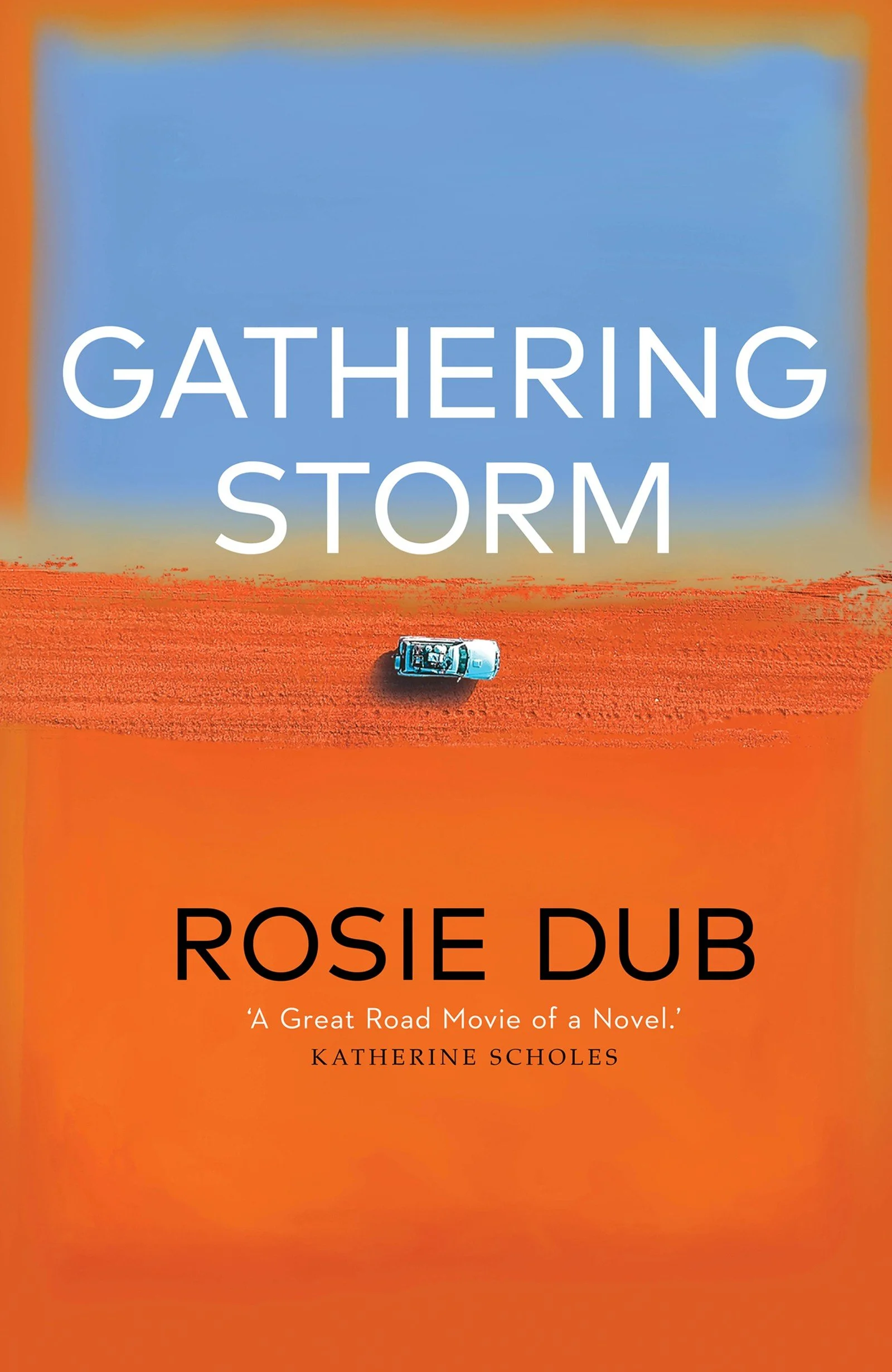
English artist Storm Cizekova grew up believing that her mother died when she was born. But then Storm finds a photo of herself in the heart of the Australian desert – and in her mother’s arms.
Haunted by unanswered questions, Storm embarks on a journey of self-discovery that will challenge everything she holds dear: her family history, her art, even her relationship with her partner Max. Who is she really, and where does she belong?
Her search will take her from the snow-covered Malvern Hills in England, to the rich red heart of the Australian outback. Retracing her mother’s footsteps through the stark beauty of the outback landscape, Storm hopes to find the courage to confront some shocking truths from her past and the strength to face her future.